By 1991 the four Complete Class Handbooks had been
completed, and they had made TSR lots of money. It was a great idea! Up to that
point, TSR had only been able to target Dungeon Masters, but with this series
of books, they were targeting their whole audience. I did find them to be
incredibly helpful: there was a large influx of new players entering the
market, and they needed direction. One can also say that the Handbooks changed how
we think in regards to what the product was, and what it could do.
The Class series offered options; that is all; and it didn’t
try to say otherwise! I think that it also showed respect for the DM. Yes, they
could substitute for a lazy DM, but they also fit well within a setting, any
setting; and it made sure that the players knew that if the DM said that
Swashbucklers weren’t available, then they weren’t available.
The Class series also restored what the PHB had taken away .
. . not that it mattered. If people wanted to play a barbarian then they are
going to play a barbarian. They explained things in detail, so that we all
understood our options; and they took novice players, and instantly helped them
become more experienced ones.
Next, they wanted to do for the races, what they had done
for the classes, which would be great! Right? Well, let’s just look at the
first of this series.
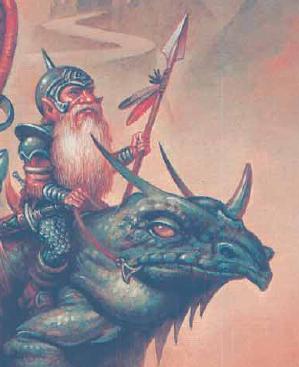
PHBR6 The Complete
Dwarves Handbook was released in November of 1991. It was designed by
JimBambra, a contributor to
Dragon Magazine, and a designer of modules; however,
this book would be his greatest contribution to AD&D.
Chapter 1: The
Creation of Dwarves
The Dwarf is one of the great fantasy races, and one that
has been with the game since the beginning. Most of us are familiar with the
Tolkien dwarfs, but there was a problem with this, as TSR wanted to separate
themselves from the
Tolkien properties for a variety of reasons; mostly
financial, but I think that it
kind of
worked in our (the consumer’s) favor since it encouraged us to make our own
way. This chapter was a collection of myths, identifying a core
AD&D dwarf
that could be used for any setting, including home-brewed ones, even if it is
just a place holder until we can get around to really working on this fantasy
race.
Personally, I feel that there is a lot of text here that
really doesn’t do anything. Sure, it
gets you to think, but it can cause some confusion at the table, especially if
the DM has developed his own dwarves, or he prefers the Tolkien genus. This
seems so innocent, but it does step on the Dungeon Master’s toes, and it really
was the first shot across the bow which ended up getting the entire Complete Handbook series banned from
some clubs. The DM couldn’t read everything, and just knowing that TSR did this
was considered an intrusion. An advanced DM builds worlds through play, not
through products. It might seem unfair, but it brought the attention of the DM
that they didn’t know what else was in these books, so they were dismissed;
which was kind of sad because there is stuff in them that could improve even an
advanced user’s game.
CHAPTER 2: The Dwarf
Sub-races
The Player’s Handbook entry for Hill Dwarves was a great
start, further entries were added to the Monstrous Compendium which allowed the
DM to create these sub-races; however, that information was for DM eyes only,
so this chapter put the information into the hands of the players, by
identifying the different varieties discussed in this book.
CHAPTER 3: Your Life
as a Dwarf
This was another chapter that defined the AD&D Dwarf,
and could be used if no dwarf races where defined by the DM. Intermediate users could
use it to get an idea on how to create their own dwarf cultures, but I think
that this chapter is just overly precise and may not be true to the campaign.
It implies that all dwarves are the same, and that they have only one culture;
which is really limited.
CHAPTER 4: Character
Creation
Another functional chapter which expands on ideas in the
Player’s Handbook, it even adds a nice alternative for altering the Maximum
levels that a dwarf can obtain.
Many players complain about this limitation; I
am not one of them. Level limits are options, ignore it if you don’t like it,
but I do like how this book gives you a nice way to compromise.
CHAPTER 5:
Proficiencies
This chapter is a mess, and once again it steps on the
reader’s toes. While the Class Handbooks offered new proficiencies, or corrected
mistakes made in the books; this chapter hides the new proficiencies in with
existing proficiencies that have been redefined to fit the author’s view of
dwarfs. Do these entries make sense? Yes, but they add rules where no rules are
really needed. I suppose that it helps a player play with an inexperienced DM,
but when the DM is advanced, this chapter will be inaccurate.
CHAPTER 6: Dwarf Kits
This is the longest section of the book, and it details
further ways to customize a character. This chapter is passable, but overall
the kits are more limiting and short-sighted than anything, but they are
options! Honestly, I see most of these kits as being more suited as NPCs, and
the ones aimed at players are
min/maxed. Once again you have the author making
assumptions that probably aren’t true, and trying to make a market where there
is no demand. Did we buy these books to get kits? I suppose that
a lot ofpeople probably did. I liked them because they offered ideas, but I really don’t
think that any of these kits are all that inventive, nor practical for long
term play.
CHAPTER 7: Role
Playing and Personalities
I always preferred this chapter of the Class books over the
Kit sections. This stuff is more practical, and offers more to the game. These
ideas are good, because they are ideas. They don’t tell you how to play, they
give the readers ideas on how to play which they can use or not use. These concepts
also don’t interfere with anything: They aren’t backed up by stats or
preconceived notions. These work and are well written.
CHAPTER 8: Mining
This chapter is just weird. Let’s gather up our friends and
play a nice game of mining! Who does that?
I suppose that this chapter could be helpful but it is full of random
tables of things that I’ve never needed. I do kind of like the idea of this
section, it’s just that I don’t think that it was well executed nor all that
functional. It is mind-candy. I wonder
if anybody actually played the game like this? Running businesses and figuring
out profit is difficult, and I think that there was some false advertising on
TSR’s part in regards to what this chapter allows you to do.
CHAPTER 9: Equipment
On a mechanical level, the dwarf has gone through some
changes, and one that I feel did him harm was removing his exclusive ability to
wield +3 war hammers. This meant that a cleric of a different race couldn’t
achieve anything better than a +2. It might be a +5 weapon in dwarven hands,
but he’d never know it. It helped offset the dwarf and make him unique. Dwarves
are known to be strong fighters, but this really isn’t reflected in the 2e
system.
This book does not correct this
issue, but it does add a
two handed battle axe! That is just as good, right?
Not really. It does add some cool ideas though, such as
dwarven war machines,
however I question if these things were ever play-tested properly.
CHAPTER 10:
Strongholds
This chapter is fun for all users. It adds to the Castle
Guide and is more for the DM than players; there are perhaps a bit too much
attention given to treating it as a random encounter, as there are some strange
tables here as well, but there are some really good ones too! This is entertaining
stuff, it helps a DM generate a history of the place fairly quickly. I’m not
sure of how functional it would be on the fly, but during prep it can help you
achieve results which you might not expect. It reminds me of a
Gygax Appendix,
which I love.
CHAPTER 11: Designing
Dwarf Campaigns
This is another of my favorite chapters, it encourages and
helps the DM design his own dwarven cultures which are unique to his gaming
world. This has always been what makes the game fun for me, and a lot of this
can be determined during play, allowing the DM and the player to figure out the
dwarf’s world. It encourages the DM to make
the game more about the players and less about outside influences, which
provides a deeper and richer experience, even if one isn’t playing a dwarf.
SUMMARY
You can figure out the details of this book on
your own, so it isn’t required at all to play the game. I think that it still
works on multiple levels; the book targeted the novice user, but it is also
something that one can use to strengthen their world regardless of DM skill
level. It does send mixed messages, but I suppose that that is the nature of
the game.
I think that there is a bit too much fiction in this
product; while it is fun to read, at the table, that stuff tends to get in the
way. Novice and Intermediate DM’s can drop this into any campaign, and if
it is used, it will strengthen your game. Advanced users will enjoy the
templates for culture building, as they can be used for more than just dwarves,
and they'll get a kick out of the stronghold section which can really come in handy
during prep.
I tend to be kind of hard on the race series, but overall
the first entry in it is a helpful one.
Other reviews complain that it is anugly book, but what do you want? These things were made cheap to sell cheap. I
dare say that if they were given a hard cover and treated like a core handbook
than they wouldn’t be as popular as they got. Today it isn’t uncommon to see
designers over-producing their books, which forces the consumer to pay more, or
the consumer passes it up completely because he just can’t afford it.
This book, while it was marketed to players, is really a DM
aid: Mind candy. I would consider this to be more of a luxury item; it does
handle boring work that a DM probably doesn’t want to do himself, which makes
for a great product. As I said, many of the Kits seem to be more practical as
NPCs, it doesn’t attempt to be core, but offers suggestions to modify play, and
offers lots of options that if used all at the same time would bog the game down,
but if picked through judiciously, can add an element to the game that might
not be there without it.
I give this book a B-.
As far as value goes, this thing can be had rather cheaply
in physical form, from $10-$20. I have seen PDFs of this book which were
actually stripped of some of the content; it comes with lots of goodies at the
end of the book, such as character sheets and design templates, so if you do
buy the PDF make sure that it an official one, scanned from the book itself,
vs. reformatted. I would definitely prefer the hard-copy though, as it will
more than likely be used during prepping sessions, and it is nice to have
everything right there in front of you. Since the book is so cluttered, it can
be helpful to mark the pages with paper clips, and highlight the text that you
want to use to maximize its usefulness.



 9298 RA1 Feast of Goblyns was published in January of 1991.
It was designed by Blake Mobley and features some excellent cartography by Karen Fonstad. This
module was the first to be published for the Ravenloft Campaign Setting, and
came with some goodies that probably should had been in the box set, namely an
official Ravenloft Character Sheet that you could photocopy, and the card-stock
cover was a Ravenloft DM Screen.
9298 RA1 Feast of Goblyns was published in January of 1991.
It was designed by Blake Mobley and features some excellent cartography by Karen Fonstad. This
module was the first to be published for the Ravenloft Campaign Setting, and
came with some goodies that probably should had been in the box set, namely an
official Ravenloft Character Sheet that you could photocopy, and the card-stock
cover was a Ravenloft DM Screen. 
 Before we play Dungeons and Dragons, the Goblin is a
terrifying monster of legend and lore that has survived all the way up to
today, which says something. Adults may not believe in goblins, but children
do! Once we play D&D we reevaluate our thinking of goblins, to us they are
very minor and low level things, all of the horror has been stripped from them
and to a jaded D&D club, just the mentioning of them insight groans and
complaints. The D&D goblin is the lowliest of the low level monsters, so I
find it interesting that that is exactly where (I presume) Blake Mobley
started, which I really like. It took the weakest monster in the DM’s arsenal,
and it restored it to the terrible goblins of our youth, and made it once again
the nightmare that it once was. Because it gets you thinking about this, and it
does a good job of it, it silently encourages the DM to look at all of the
monsters in the same light. Many of the creatures that we use predate the game
itself, the creators of the game gave them stats, and some of these stats were
muted down to challenge low level players, they had become only mechanical things. Giving these monsters a deeper look, and to modify their stats to better reflect their
legendary attributes, while considering why our ancestors feared these creatures, and then
put them into their own environment, forcing your player characters to enter
the world of that monster, in all of its terrible glory! That makes a monster NPC really
come alive.
Before we play Dungeons and Dragons, the Goblin is a
terrifying monster of legend and lore that has survived all the way up to
today, which says something. Adults may not believe in goblins, but children
do! Once we play D&D we reevaluate our thinking of goblins, to us they are
very minor and low level things, all of the horror has been stripped from them
and to a jaded D&D club, just the mentioning of them insight groans and
complaints. The D&D goblin is the lowliest of the low level monsters, so I
find it interesting that that is exactly where (I presume) Blake Mobley
started, which I really like. It took the weakest monster in the DM’s arsenal,
and it restored it to the terrible goblins of our youth, and made it once again
the nightmare that it once was. Because it gets you thinking about this, and it
does a good job of it, it silently encourages the DM to look at all of the
monsters in the same light. Many of the creatures that we use predate the game
itself, the creators of the game gave them stats, and some of these stats were
muted down to challenge low level players, they had become only mechanical things. Giving these monsters a deeper look, and to modify their stats to better reflect their
legendary attributes, while considering why our ancestors feared these creatures, and then
put them into their own environment, forcing your player characters to enter
the world of that monster, in all of its terrible glory! That makes a monster NPC really
come alive.
 I would recommend this to a new DM, but as a trick. It will
give him many suggestions on how to run a game, but it will also prove to the
DM that not all modules are even functional as is. It is best to break them apart, dissect
them, and know that all modules are full of errors and not worthy of any of the
trust that you want to give them. Buy a product, but
I would recommend this to a new DM, but as a trick. It will
give him many suggestions on how to run a game, but it will also prove to the
DM that not all modules are even functional as is. It is best to break them apart, dissect
them, and know that all modules are full of errors and not worthy of any of the
trust that you want to give them. Buy a product, but 
.jpg)