Wizard's Weapons Fixed with the wave of a wand!
- Dagger
- Staff
- Darts
- Knife
- Sling
Wednesday, July 19, 2017 | Labels: campaign ideas, combat, magic, money and equipment, Proficiencies, Supplemental, wizard spells | 2 Comments
Gothic Earth Session 10: The Lost Village of Old Belalp
The players have been reluctant to explore the wilderness, so I put some pressure on them, Mr. Harker, who is now just down the mountain helping with research in the city of Brig has been followed by a German Detective, he had been seen with PC Sam White at a bank in Zurich. He is smart and looking to recover the Relic of St. Sabaldus. Harker had to risk sending a pigeon up to the players, but it is unknown if the message had been intercepted or not.
In other news, the scholar who has written a book on the Belalp Witch has finally been able to finance an expedition to search an area where she believes is the best spot to find old Belalp, and the players manage to get hired on to lead this expedition.
It just so happens that one of the players were able to decipher the clues found a few sessions back and had a really good idea where the church was, but they were able to get there with a bigger party and on somebody else's dime. It was a bit more difficult than they thought, the church wasn't where the cryptic map suggested. Well, it was, but it was buried deep under the ice. After more searching they found a chimney sticking out of the glacier of Mt. Sparhorn, melting the snow, the Explorer PC climbed down and discovered the perfectly preserved medieval village of Belalp trapped under a dome of blue ice.
The scholar had also hired some big strong locals who were far too large to climb down the narrow chimney, but this presented a problem. The party needs to HIDE the Relic of Sabaldus in the church, and it will do no good to have the world know about this place. Exploring the entombed village, they find a cave to the south which leads to the medieval Cathedral they have been searching for for so long.
Exploring the Cathedral, they find an ancient church which the cathedral was built around, and in the basement of this church they find a stone seal with a terrible warning, beyond this seal, placed by Saint Sabaldus himself, is the Witch of Belalp, however this seal is unbroken.
The players return to Old Belalp and spend the night in an old inn hoping that the scholar and the rest of their party get bored and just go away, or something; which doesn't happen. In the morning they find the scholar feeling betrayed which she is taking pictures of this amazing place.
Long story short, the players finally discover the cave system in the area, they exited the cave on the other side of the Massa River, traveling in hours what would normally take days. The scholar is pissed, she wants to go back to Old Belalp and further study the medieval village for her next book. The players agree but this time they exit the cave all the way back at one of the abandoned mines just outside of current Belalp. The Scholar is pissed, after all of that work, she got a few pictures but the village of Old Belalp is still lost! This pleases the party. She might have pictures, but she has still been bamboozled.
They now know that they can reach the church through the Belalp #2 mine, now it is just making some decisions about what to do. Breaking the seal and entering the tomb of the Belalp Witch is going to be incredibly risky, this dungeon is the meanest and most difficult that I have ever designed, I don't know if they are ready for it yet, but we'll see what happens.
Game wise, I was lazy. I had to work overtime the night before, and I was exhausted. I rolled for random encounters but we had no combat at all. We still had a blast though! I did run off script, changed the look and feel of the old Medieval village, originally it was supposed to be open air but I think that the last minute change was a lot more fun.
I have no idea what is going to happen next game, the secret BBS that my players use is buzzing, and the spell casters are getting together tonight to come up with some ideas on how to best manage their spells. I'm excited!
Friday, July 14, 2017 | Labels: Ripper's Gaming Sessions | 0 Comments
Global Trade made Easy
| The Rug Merchant: Arnedeo Simonetti |
The town takes a good load of peaches into a city, and sells them to a merchant who has developed a new technology; he can turn those peaches into brandy which is no longer a perishable item, in fact, this brandy is highly prized and everybody wants some, which draws attention to the regions peaches. The royals who live far away will pay a lot of gold to have special orders of peaches quickly carried to them, and will do whatever it takes to keep this supply line open. The merchants will be making a killing on this product and take care of the people all the way down the line. This translates into power, and from a DM stand point, this stuff writes itself.![]() |
| Via: Pinterest |
- Coal
- Textiles
- Tin
- Copper
- Iron
- Tallow
- Timber
- Iron
- Copper
- Lead
- Silver
- Wine
- Textiles
- Coal
- Amber
- Flax
- Fur
- Hemp
- Honey
- Slaves
- Tallow
- Timber
- Wax
- Whalebone
- Carpets
- Copper
- Gold
- Horses
- Iron
- Mercury
- Paper
- Precious Stones
- Silver
- Slaves
- Textiles
- Cotton
- Gold
- Ivory
- Salt
- Slaves
- Gold
- Ivory
- Precious Woods
- Slaves
- Animals
- Carpets
- Copper
- Iron
- Naphtha
- Paper
- Textiles
- Carpets
- Copper
- Drugs
- Gold
- Indigo
- Iron
- Precious Stones
- Precious Woods
- Textiles
- Brocade
- Fine Textiles
- Jade
- Rhubarb
- Silk
- Slaves
- Brocade
- Camphor
- Porcelain
- Satin
- Silk
- Sugar
- Taffeta
- Tea
- Aromatics
- Drugs
- Gold
- Precious Wood
- Spices
- Tin
- Ambergris
- Aromatics
- Cowries
- Drugs
- Indigo
- Ivory
- Precious Stones
- Spices
- Textiles
- Tortoise Shell
Tuesday, July 11, 2017 | Labels: money and equipment, NPC's, Time and Movement | 4 Comments
The Role of Woman in D&D
![]() |
| Joan of Arc |
As far as private games go, they are all different. All players are different too, but there are risks that we take. These risks apply not just to women, but to the younger crowd as well. People can take advantage of others, and I do believe that we do a terrible job of policing ourselves. We aren't exempt from predators, and while I know that there are a lot of decent people who won't sit idle while somebody is getting worked over, there are still too many in this hobby that will do anything to avoid confrontation and just do nothing.
The role of women in gaming goes beyond characters. They are leaders, innovators, muses, artists. Are they properly recognized? I think that they are now, however, if they were properly compensated for their efforts is a different subject altogether.
It does feel that men have an easier time getting new ideas accepted and that women either take supportive roles or are forced to stay in them. I think that the greatest influence that women have had on my game personally, is in regards to story. I've pulled back on story-based gaming, but it has been said over and over again that the players (both male & female) want to know that this is going some place. They like reoccurring characters, they like slippery villains, they like having things going on in the background. They like long-term story arcs, and being able to walk around in a storybook world which reacts to them.
This, I have found, can be accomplished without forcing the players to play a linear story. I know that many DMs have a hard time grasping these theories, they translate into terrible modules, but the idea isn't creating a scripted game, the idea is to have a script running in the background which must be written and rewritten as the game progresses. My players love to be challenged by a railroad designed into the game, and it is their job to get off the tracks.
Some can credit other sources for the interactive story, but to me personally, it was Laura Hickman. She is co-credited with her husband, Tracy, but it was this format which got me started. The modules required a lot of cooperation from the players, but the principles, once separated and broken down into their basic components, showed a very advanced approach to game design and theory. Not settling for JUST Dungeons & Dragons, but constantly redefining it, and molding it to fit a larger vision. Creating worlds where there is something going on, a meta-plot which stays in the background. Defined objects that have meaning and history.
Laura taught me the joy of background. She gave me the courage to redefine old ideas and not be afraid to put elements of myself into the mix. It has taken a long time to find a good combination of old and new, but the effect that it has on the game is amazingly satisfying for everyone. I think that it is a warmer, and more personal game than just enforcing the same rules all the time.
My wife yells at me when I stray too far from this path. She reminds me that she and the other players can go anywhere to play Greyhawk or Forgotten Realms, it is my mind that everybody enjoys crawling around in. The men who play are of the same opinion, but we don't talk to each other like that.
![]() |
| "Bulgar Warrior" via: Pinterest |
Emotion. That is the magic element right there. Tragic villains with motivations beyond just because they are evil. NPCs with nuanced emotional ranges beyond those found in the average cocktail weenie. These are elements which I learned from playing under and developing games for female players. I don't think that I would have ever gotten there by just running games for a group of guys, and the guys who do learn to play this style have a very difficult time going back.
Sunday, July 02, 2017 | Labels: campaign ideas, NPC's, rants | 3 Comments
Are Thief Player Characters Still Relevant?
![]() |
| Albrecht Dürer - Cupid the Honey Thief. 1514 |
It's not that I think that the entire skill system is bad for the game, I just feel that systems like Pathfinder and modern D&D have allowed it to take center stage. It controls too much! People have gotten too reliant on them, and use the skill system to bypass fun parts of the game. It alters the flow, speeding it up, and I feel that it interferes with immersion.
To make a long story short, specifics can correct the problem of mechanical interference, but that doesn't mean that we should completely scrap the NWP system; and then we have the thief class. A skill based class that relies upon them to function.
In a game where the traps are specific, we know how they function and the players can locate them with tools or equipment, and come up with a plan which may or may not result in disarming them, where does the thief fit into this?
- Thieves are more expendable.
- They can figure out the hidden workings of advanced traps.
- They do more for the team than just disarm and locate traps.
Handling Checks
In my last post, I suggested that we try to stick to specifics as much as possible. The DM listens to the plan, and translates the odds of success to the d%; however, there are times when the players are going to have to make checks. In times like these, I prefer the d20. It is fast, fair, and usually in the player's favor.
d% Thief Checks
![]() |
| via: Pinterest |
As a player, the thief skill system doesn't work at early levels of play and offers no challenge at higher levels. The best games are when you are gambling with your character's life. As a player, if something is dangerous, I'm not going to even attempt it unless I've got at least a 70%. If things get desperate, I may attempt it at 50%, but never below that. If something has no risk, I will just sit there and roll dice until we all get bored or it works . . . hours and hours later in game time. That sucks, and that isn't playing the game.
I know that there is a huge population of gamers who think that the NWP system is broken, but I don't feel that it is, of course, the way that I design my games I enforce no reliance upon the system to use it. It can allow a user to bypass an obstacle, or make a section easier if you are successful, but play doesn't stop because of a failed check; that is a symptom of bad design. It all boils down to percentages, the d20 just uses increments of 5%. If a character has a DEX of 15, with a -2 to his ability check, he's got a 65% of succeeding. That is actually lower standards than I would normally allow for a dangerous task that will kill me if the dice say no.
PLAYER'S OPTION: SKILLS & POWERS
It was this book that got folks prepared for 3e. It focused on a reliance on skills over the traditional game. It even stripped the class system that we all loved in favor of building some character class that made it even slower to roll up new characters, and caused players to stop play to look at the weird rules in this thing. I hated it. I'm still not a fan.
Regardless if you like the book or not, it did say something interesting . . . if you could find it. It suggested turning thief skills into NWP. How stupid is that? I mean, it goes against years and years of tradition! Besides, thief players aren't going to want to sacrifice NWP slots on skills that they used to have from the start of the game, right?
RAVENLOFT: Masque of the Red Death
This boxed Campaign setting actually predates the Skills & Powers book, but it had lots of mechanics which were unique to it. It isn't a medieval fantasy game, this one takes place in our world during the 1890's. It altered all of the classes, but the most affected were the Thieves.
All of the characters had been depowered, there are no super-heroes in this game, what makes them playable is the skill system, however, this still isn't a skill based game. You aren't going to find the Pathfinder like rules which are overly strict, you pick your skills which define your character, and you play. The skills are passive. You still use specifics over rolling the dice, but I digress.
Thieves are no longer a class. While the other classes still use skills, the class that is dependent upon them is called Tradesmen. If a character doesn't use magic, and can't be defined as a soldier, they automatically become Tradesmen, thus, this is the dominant class.
![]() |
| via Pinterest |
As a fan of thieves, this method works great! I always preferred to play against the grain. I never played The Greymouser type thieves, I could probably count the times that I've used Pick Pockets on one hand, and I never started building it up until I was satisfied with my other scores. It just sat there, ignored. In this system, I don't have to pick it at all! I can replace it with some other skill that I want instead, something useful to me and how I want to play my character.
But wait . . . didn't I just say that Skills & Powers was stupid?
It is. It provides very little motivation to play-test the ideas held within it, however, this system has been play-tested at my table, and it works. It works amazingly well! Masque of the Red Death, to myself and the other members of the club, made D&D fun again. Its higher level of challenge changed not just how we game, but how we see the game itself.
- Thieves are all different
- Thief skills work from the start
- The challenge is consistent, regardless of level
- The thief skill system does not place limitations upon the system as a whole
But Percentages gave more to the game than yes or no answers
As a player, I was always torn. I like rolling my own results, but sometimes I wanted the DM to keep the actual results a secret from me. I wanted to simulate thinking that I'm moving silently but not really being sure if I am or not. As a DM, these thoughts were amplified, but I was stuck because I couldn't figure out how to simulate the event without taking away player agency. This system actually allows that.
Either the DM can translate the d20s into percentages, or tell the player who succeeded their check that they believe that they have found a route which is possible to move silently and hide in shadows, then get confirmation that they still want to do the action or not. If they do, then the DM rolls the percentile check to see exactly how quiet they are.
The point is that no matter what we do, we've taken the traditional Thief Skills System, which was closed and set in its way, and changed it into a Skill System which allows the player and the DM to open it up when they want to.
THE DOWNSIDE OF THE SYSTEM
- Players can no longer get a 95% chance of success
- A perceived penalty imposed on low ability scores
- Player's who do want to play traditional thieves hate this
- A psychological loss of control
- Requires a talented DM to function
- Cleaner Character Sheets
- The Level Cap has been removed
- Custom Characters without breaking the system
- Fast and Easy NPCs who are competent without cheating
- Creating Hirelings that grow with the game and aren't static
- Easier to level up (and level down)
- Rewards Imaginative Play
- Skills can be given to Races without weird limitations
Before closing, something needs to be addressed. Since the players are spending slots on abilities, should they get more slots to spend? The answer is no. They still get the same amount. This is balanced by the abilities themselves being useful as soon as they are chosen.
Unmodified skill checks do place caps on abilities. DEX of 18 = 90%, and on the low end, 9 = 45%.
The 3d6 method of STAT Generation prefers to give results in the 11-13 range, which gives you some good numbers that are fun to gamble with, 55%-65% but aren't fixed in my games, they go up and down. If you choose, the Thief Ability Table found in the 2e DMG can be used in conjunction with this system if you need to lean on it now and then. Since the system is open, we can change the difficulty level of a task as we see fit.
Most of the time, it really doesn't matter. The core Thief System is a nitpicker. Either the thief can pick a lock, or he can't. The players can decide to break the door, spend a spell opening the door, or ignore the door and walk away from it. Who cares if the Thief picks a lock? Why impose that restriction at all?
.
Wednesday, June 21, 2017 | Labels: Ability Scores, Mechanic Series, NPC's, pc classes, Proficiencies | 9 Comments
Streamlining The AD&D Skill System
Since writing that article, I have unknowingly adopted a set of house-rules that allows more freedom for everybody based on principles I've learned from researching Original Dungeons & Dragons and have a deeper understanding of how players interacted with the world before those systems were in place.
It goes back to Open & Closed systems. The NWP system is designed to be closed, but it is also designed to be opened up by the players and the DM when it needs to be. What defines this need is the level of detail.
REDEFINING THE SKILL SYSTEM
The proficiencies are guidelines, they help players get a clear idea of who their character is. They are tools which a player can use to tell the DM that they can do something very well.
Having a proficiency is a pass. The player is not limited to these skills, but having these skills defined and written down allows that player to use them, and get extra-XP for using them well.
Owning a Proficiency is proof that your character can definitely do this, and may even go beyond what is defined in the handbook.
USING A SKILL
This system is primarily the total domain of the player, DMs don't use this system, only players do. It is up to the players to remember these things and use them wisely. Since having a skill is a pass, when the DM asks how the character knows something, and they refer to the specific skill, the conversation is either over, or the DM can have them roll a skill check if that needs to happen.
It is also up to the player if they want to risk rolling the dice to perform a task or to start a dialog and get specifics.
Example: The player has an investigative skill which allows a methodic search of an area via the dice. The player can automatically use this when searching a room, but a failure is a failure. Alternatively any player, even those that do not have this skill, can ask for details. They can interact with the setting and the DM will tell them the results. Once this is done and the player believes that they have exhausted the place, they can say that they would like to do a skill check, and see what happens.
ACQUIRING PROFICIENCY SLOTS
The idea that a character only knows what is on the character sheet is preposterous and self-limiting for no real benefit to the player or to the game. The DM is going to have to invent fast throw-away mechanics at the table on a case-by-case basis. Specifics dictate what can and cannot be done. Doing something that you aren't proficient at on a regular basis may equal gaining a proficiency.
For instance, if the game is played in the mountains for several months, the players are going to have a really good chance of understanding what they are doing. How can we translate this though?
- The DM can just have them roll a STAT check to see if they picked it up, and just give it to them if they are successful.
- The Player can write it in once a new Prof. slot becomes available if they chose to.
- All slots beyond those chosen at the creation of the character are left blank until a skill is learned through specifics.
There is a myth about open Skill systems, that goes along the lines of the Player taking advantage of the DM. Players going out of their way to change the tone of the game. The player CAN try anything, however, every hair-brained scheme takes the time to execute, time that the player probably doesn't have. I've been playing this way for a while now and so far my players have all embraced the tone of the game and do their best to preserve it.
As DM, I reserve the right to ask the player how they learned this new skill, if they can't tell me, they don't get it. My players so far have written down things that would have been handy in the past. Things that they had picked up along the way but I didn't give it to them for free, and I do give out skills for free if they had been earned.
The question, "How did you learn this?", is a good governor for the skill system. Slots don't have to be filled up right away, and the question goes back to the player; "How can I learn this skill?"
Tuesday, June 13, 2017 | Labels: experience, Mechanic Series, Proficiencies | 13 Comments
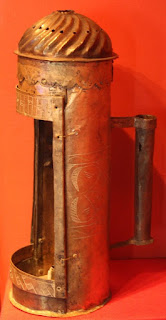
Torches: We are doing them wrong
Forgotten Arts & Crafts, Wilderness Survival Guides, American Indian crafts and Depression Methods are among my favorite Non-Fiction Book Subjects. Simple living comes in handy regardless of income.My father raised us to remember these things and see their value. My grandfather believed that electricity was a fad, and preferred the old ways more often than not. He had a tractor, but for tedious jobs such as picking corn, he took the horse and cart out to the fields, his logic being that the horse just kept following him, he didn't have to stop working to go move the machine.
I do the same thing for my children, I raise them to be self-reliant and to know where they came from. It has been hard to adjust to city life, but I am doing my best. For vacation we tend to go camping, there are many important skills that one can learn from primitive camping, the most important being self-reliance.
In regards to light, we have modern battery-powered lanterns, but we leave them at home. Those things are terrible! They do nothing but draw bugs and batteries are very expensive compared to other forms of fuel. Instead, we use railroad lanterns. Not only is the fuel cheaper (and a hell of a lot cleaner!), but the light doesn't draw insects and doesn't kill your night vision.
Torches, these are easy to make, and we've done it! They suck. The fire itself blinds you, in fiction, they always have the person in the lead carrying the torch, but it should be the person in the back, though it does get passed around a lot. The torch-bearer really can't see very far, you can't even see the ground which is a problem, and it is harder than you think to hold a torch above your head and out of your eyes. Even a lantern will do the same thing unless it is fixed with a shield, you don't want the light to be too bright, just bright enough. Cab drivers who drove at night had to keep the flame itself out of their eyes, seeing the ground was imperative because of potholes. Nobody wanted to drive at night, even with a light source, because moving around is dangerous. People did it, but people also got lost on their own properties and drowned in rivers.
In regards to cave exploration, torches aren't the best idea. The best option is a candle, low levels of light to highlight your surroundings. They told you more than just your surroundings, the flame is sensitive to changes in air quality, professional miners preferred candles to lanterns, it wasn't just budget concerns. Even today you'll see a lot of miners smoking, they watch the smoke to see the air flow. Once battery operated light came about, that is when people started carrying canaries.
One would be shocked at how deep the old-timers got inside of caves, and these weren't professional spelunkers, these were just everyday locals who took some time off and wanted to see things that nobody else had seen. They used candles, and they'd climb deep inside of these things until they either got scared, ran out of time, or could progress no more because of the muck. They'd mark their spot with their name and usually the date, and these writings are still in there.What does this have to do with D&D games? Nothing. We're dealing with fantasy, it is just easier to have tunnels that you can stand upright in, the rule-of-cool dictates a lot of stuff! I do give them raw caves to explore when I want to. Passages that aren't 5'x5'. I'll also get picky about supplies if that is the game, but we rarely play that game.
Elves can see normally at night above ground, starlight is enough, but it is reversed, the Dwarvish folk needs to carry a light source.
Candles are preferred, lanterns break, but the oil can be used to make a torch. To light a torch you only need one stick, but you've got to bring enough cloth and fuel with you. The problem with light is that it gives your position away. Enemy sentries typically sit in the dark, living spaces are lit, but that is it. Golin will sometimes light passages to help sentries see intruders sneaking around in the dark (if they are paying attention), so light itself is part of their survival plan.
The players tried to utilize the Permanent Light Spell, which works great in unoccupied caves and dungeons, but since you've got to put it out to sneak around, and recast it, it can be terribly expensive.
That is the game that we prefer to play. One of stealth. I have also found that it is difficult to put a torch out, the fastest way is with water, a slower way is to smother it with dirt, the slowest way is to tap and roll it around on stone, which is also noisy. I don't think that I've ever used these experiments in a game before. Maybe stripping it off with a sword real quick and stamping it out would work? That might be a fun game!
Tuesday, June 06, 2017 | Labels: experience, money and equipment, vision and light | 6 Comments
- campaign ideas
- NPC's
- combat
- Miscellany
- encounters
- rants
- Ripper's Gaming Sessions
- monsters
- money and equipment
- Reviews
- pc classes
- magic
- Proficiencies
- Treasure
- Time and Movement
- Sunday Supplemental
- experience
- campaign add-ins
- Alignment
- races
- Mechanic Series
- vision and light
- Ability Scores
- wizard spells
- Supplemental
- priest spells
My Blog List
-
Palace of the Vampire Queen: The First Ever D&D Module with Pacesetter Games – Episode 293 – 7/31/2026 - Shane Plays Geek Talk Episode #293 – 7/31/2026 Bill Barsh of Pacesetter Games holds forth on Pacesetter Games updates and the 50th Anniversary of Palace ...8 hours ago
-
New Web Log - This will be my last post on Campaigns Playable. Blogger no longer provides helpful support. I linked comments to Google+ and lost access to managing my co...1 day ago
-
Incomplete List of D&D Related Things that Are Hard to Imagine - An important aspect of tabletop RPGs that is insufficiently discussed is the theatre of the mind. When playing a game, we - players and DM alike - pictur...2 days ago
-
Circa Vinted, il Possesso, Dragonbane e Uno Sguardo nel Buio - Negli ultimi due o tre anni ho iniziato a usare Vinted con una certa assiduità. Parallelamente ho abbandonato eBay sempre più. I motivi sono ovvi a chi c...1 week ago
-
The Old School (Hyperborean) Renaissance - Are these poorly-masked adventure hooks? Yes, yes they are. For the last century a peculiar fever has gripped the learned societies of Marlinko, Kezmaro...1 month ago
-
Immersion is not what you think, player - *Here we go, another post on the Substack. I think I can claim that I'm back at it. There are already two new essays lined up, and I'm aiming at one a we...2 months ago
-
How to Run a Campaign That Actually Finishes - *An all-too-familiar story...* *It's Saturday night near the end of April, but you haven't had a session of your Curse of Strahd game since December -- but...3 months ago
-
The Unwritten/Unspoken Rules of OD&D part two - Taking a closer look at: 5. Never confront characters with threats they cannot either defeat or avoid. - 5b. Never confront characters with threats that ...4 months ago
-
Mapping the pre D&D Dungeon Adventure From May 25 1972, Part 1 - Earlier (Here) we looked at the oldest dungeon dive preserved in Arneson's write up as found in *Blackmoor Foundations*. Turning now to the second dunge...5 months ago
-
RPG Design: How a Roleplaying Game like D&D Could Make Rounds Play Better - Since D&D dropped the declaration phase in favor of cyclic initiative, it has let one round blur into the next without any phases that trigger between roun...7 months ago
-
-
Lexicon of Klarkash-Ton, Hierophant of Atlantis: Lupanar - This time, we follow the good High Priest to the far future, to the final continent of Earth, Zothique, for a a tale of ennui and love: Morthylla. Witho...1 year ago
-
STILL ALIVE BITCHES - Well. Here we are again. It's been a while of sickness, needing a wheelchair, and being mostly bed-ridden. SO I do have time for games when I'm not too ...1 year ago
-
Last move - to self-hosting! - As my vote regarding Substack in the “marketplace of ideas”, I’m moving to self-hosting. I’m now at (and hopefully staying for a long time at) Blog: ht...2 years ago
-
It's been a decade, now... - This is a tough time of year for me. So, with your indulgence, here's this link to a post I did a decade ago... EDIT: I have no idea why it didn't take. S...4 years ago
-
This Blog is now on Indefinite Hiatus - Greetings, I haven’t been able to post except sporadically for a while. I just found out I will need to find a new place to live within the next few months...4 years ago
-
RIP Christopher Tolkien - LONDON (AP) – Christopher Tolkien, who played a major role protecting the legacy of his father’s The Lord of the Rings series, has died. He was 95. The Tol...6 years ago
-
Lake Geneva Original RPG Campaign: New EN World Column: #1 - Lake Geneva Original RPG Campaign: New EN World Column: #1: I am now an author for EN World with a monthly column. Six lead columns have been submitted to...6 years ago
-
Blackmoor Week 2019 (9/24/19) - Blackmoor Week and Dave Arneson Game Day running from September 24th through October 1st. This year 2019 is the 45th anniversary of Dungeons & Dragons and ...6 years ago
-
Dave Arneson Blackmoor Week and Game Day 2019 - Blackmoor Week begins today Sept 24, 2019. What are you doing this week to celebrate Dave Arneson's Birthday and his foundational game setting Blackmoor ak...6 years ago
-
Blackmoor Week Day I 2019 - *Blackmoor Week* kicks off today and concludes on October 1st with *Dave Arneson Game Day*. [image: Dave Arneson’s Blackmoor - B-Ware - Sphärenmeisters Spi...6 years ago
-
Character Concepts: Planescape pt 3 - Part 1 Part 2 Continuing my series on oddball Planescape Faction Personalities... Harmonium Sidby the Stick (LG/halfling/fighter) - Sidby's a good enough b...7 years ago
-
Ravensburg Reboot: Streamlined City Map - I mentioned in my last post how I was tweaking and reworking parts of my Ravensburg setting. Today I streamlined the city map. The old map had lots of redu...7 years ago
-
Save Versus All Wands Contest: What is the Value of the Coin Hoard? - Treasure Type H Announcing the third annual (well, not quite) Save Versus All Wands contest! You can read about and see the results of the first two - *...7 years ago
-
NIGHTMARES AND SUBURBS: CHARACTER SOCIAL CLASS TABLE - * CHARACTER SOCIAL CLASS * *BACKGROUND TABLE* *I am a big fan of the “Social Origin Roll” for all my player characters in all my g...8 years ago
-
RPGs, Avatar vs Chess Piece Playing - I've gone from DMing AD&D 1E games for friends to my kids to paying clients as a team building tool. I've seen the approaches of playing a character as an...8 years ago
Statcounter
Contact me at Ripx187@gmail.com
Search This Blog
Blog Archive
-
▼
2018
(5)
- ► September 2018 (1)
- ► April 2018 (1)
- ► February 2018 (1)
- ► January 2018 (1)
-
►
2017
(39)
- ► November 2017 (1)
- ► September 2017 (3)
- ► August 2017 (2)
- ► April 2017 (6)
- ► March 2017 (5)
- ► February 2017 (5)
- ► January 2017 (4)
-
►
2016
(58)
- ► December 2016 (4)
- ► November 2016 (6)
- ► October 2016 (5)
- ► September 2016 (4)
- ► August 2016 (4)
- ► April 2016 (4)
- ► March 2016 (4)
- ► February 2016 (4)
- ► January 2016 (7)
-
►
2015
(24)
- ► December 2015 (6)
- ► November 2015 (7)
- ► October 2015 (7)
- ► September 2015 (4)
-
►
2010
(14)
- ► March 2010 (5)
- ► February 2010 (5)
- ► January 2010 (4)
-
►
2009
(123)
- ► December 2009 (3)
- ► November 2009 (4)
- ► October 2009 (6)
- ► September 2009 (4)
- ► August 2009 (13)
- ► April 2009 (15)
- ► March 2009 (14)
- ► February 2009 (5)
- ► January 2009 (10)
-
►
2008
(73)
- ► December 2008 (3)
- ► November 2008 (4)
- ► October 2008 (5)
- ► September 2008 (4)
- ► August 2008 (4)
- ► April 2008 (18)
- ► March 2008 (5)