Showing posts with label money and equipment. Show all posts

Wizard's Weapons Fixed with the wave of a wand!

I've never been all that happy with the wizard class, specifically in regards to Weapon Proficiency. At
Level 20 they have Four slots. This is fine! This isn't my problem, the problem is that the 2nd Edition AD&D Players Handbook picks these weapons for you.

  • Dagger
  • Staff
  • Darts
  • Knife
  • Sling

It adds that the weapons that require no training can be used, this would imply that nobody needs to be proficient in them, but whatever. The deal is that, for me personally, most of these five items are not things that I mentally associate with wizards.

Dagger, and staff: Okay, I can see that. But, where did all of that other stuff come from? The answer probably goes back to OD&D, a wizard's weapon does 1d4. I can get behind this! Regardless of what a wizard chooses, mixed with his god-awful THAC0, if a mage is proficient in a sword of some kind, it still does 1d4.

I know that in my own games, we identify staff as a quarterstaff and give it the damage of 1d6. Dudes like Little John were specialized in the quarterstaff and could dish out serious damage, while a wizard probably just dorks the other guy. The 1d4 rule makes more sense; Playing a wizard, I would except that ruling.

I don't know about you, but when I think of a wizard I don't see him attacking with a dagger or swinging a staff around. In my mind's eye it is always a wand. That is what I see! Now I'll admit that I have never read the Vance series of bookswhich the AD&D system is based on. I will also admit that the biggest inspiration to what I know about fantasy wizards was gleamed by collecting stickers in the 80's (it was a thing), and ain't no rainbow summoning wizard walking around carrying a dart. That said, would it break the game to give the wizard a wand? Now, I'm not talking about those weird wands of power found in the Dungeon Master's Guide, I'm thinking just a basic everyday wand that a wizard can use in melee.

Let's stat it out:

Item: Magic Wand
Cost: 10gp
Weight: 0 lbs.
Size: S
Type: P
Speed Factor: 2
Damage: S-M 1d4, L 1d3

It acts like a missile weapon.

ROF: 1
Short Range: 5 feet
Medium: 10 feet
Long: 15 feet


If you want, you can even have it augment spells, but you don't have to. Naturally, this could open up a new can of worms if you let it, and it might be interesting! But, you don't have to. You can just judge that it is a melee weapon, and that is all. A quick burst of magic that is regulated by the users crummy THAC0.

Alternatively you can rule that a basic magic staff can be constructed at 10th level which has a longer range (10/20/30) and is required to augment spells of 5th level and beyond.

Augmenting Spells shouldn't be overly powerful, maybe just reducing the casting time of spells with Somatic, or verbal/Somatic components only by 1. Or keeping the Somatic based spells as is but doubling the casting time if the caster doesn't have a wand.

Spells can also be developed specifically for wands. Now keep in mind that I suck at writing spells, if you can improve the wording do it. This stuff isn't play-tested either, but I really can't see how this can break the game.

CREATE WAND (Alteration)

Spell Level: 2nd
Range: Touch
Components: V, M
Duration: Permanent
Casting Time: 3 days
Area of Effect: Special
Saving Throw: None

This spell can merge a magical component into a stick cut from a hardwood tree specifically for this purpose. The magical component can be collected from a magical and rare plant, and ground Ornamental stone of at least 10gp value. The magical component, over the course of three days which include regular breaks for eating, and resting, is verbally coaxed inside of the wand forming its core.

Once completed, a magic word is chosen to activate its basic power, as well as a specific flick which will cause a quick burst of magic which can be aimed at a specific target with a normal attack roll which inflicts 1-4 hp of damage. The target does not receive a saving throw, however magic resistance of any kind will always be immune to this attack.

WARNING: Augmenting spells which require the material components of stones, jewels, and/or gems which are consumed during casting tend to destroy the stones inside of the wand as well, rendering it useless forever more.

IMPROVED CREATE WAND (Alteration)

Spell Level: 4th
Range: Touch
Components: V, M
Duration: Permanent
Casting Time: 3 days
Area of Effect: Special
Saving Throw: None

This spell can merge a magical component into a stick cut from a hardwood tree specifically for this purpose. The magical component can be collected from a creature of mystical origin (Phoenix Feather, Unicorn Hair, Ground Dragon Claw etc.) given to the caster by the creature in freewill. The magical component, over the course of three days which include regular breaks for eating, and resting, is verbally coaxed inside of the wand forming its core.

Once completed, a magic word is chosen to activate its basic power, as well as a specific flick which will cause a quick burst of magic that can be aimed at a specific target with a normal attack roll which inflicts 2-5 hp of damage. The target does not receive a saving throw, though Magic Resistance will function as normal.

A wand constructed of a creature which has the same alignment as the caster, will act as a wand+1, +3 against targets which are natural enemies of the creature regardless of magic resistance. A target of the same alignment as the creature may not be effected at all.

NOTES

The only problem that I really see with this is the lack of expendables. I tend to just charge a monthly living fee to players, having a wand puts them in at least the Middle-High Living Class, if they drop below Middle Class the wand can become damaged and break on the roll of a 1.

A wand can also break if it becomes subjected to a Saving Throw, if this is the case it falls under Wood, thin on the Item Saving Throws table.

A wand is also ruined if it is subject to Dispel Magic.

A wand cannot be used if the caster is unable to speak, flick their wand, or if magic doesn't function in that area. Areas of wild magic can also cause some weird things to happen.

Wand attacks work exactly the same as missiles, targets gain bonuses for taking cover, and if the armor vs weapon type is used, damaged is halved. It is also dangerous to fire a wand into a melee, see the rules for how to run it.

A basic wand may be commercially available or the player had to buy one from his instructor.

A captured or found wand must be attuned to the finder. The captured or found wand functions normally until either a natural 20 or a 1 is rolled. 20 indicates that the wand is attuned to the user, if it was captured the wand now belongs to the new owner. If a 1 is rolled before a natural 20, the wand rejects the new owner and no longer functions, if not, in the case of an improved wand, outright cursing them. Of course attuning oneself to a found or captured wand can be done through practice, the player just keeps rolling until a 20 or a 1 is rolled. Alternatively, an improved wand can be a bit more difficult, a limited amount of time (maybe 10 tries) can be attempted against a specific target, (INANIMATE OBJECT= AC 10?) failure to hit within that window results in the wand ignoring you.

A cursed wand always rebounds on the user with the roll of a 1. Always strikes a random person on a successful hit, and only hits the specific target if a 20 is rolled. The user of a cursed wand refuses to see that it is a problem until the curse is broken.

Finavryn brought up a similar idea on the OD&D Discussion Forum, writing a cantrip spell he calls ZAP, which can be found HERE 

Global Trade made Easy

The Rug Merchant: Arnedeo Simonetti
There is a class in D&D that your players aren't necessarily interested in playing, but they are a big piece of what makes our worlds work. The Merchant class! This stuff doesn't sound like it effects the players, but it does. It effects them a great deal. It is they who the roads were built for, and it is they that allow civilizations to become empires. Only by working together as a whole is civilization possible.


I have already written an article about basic trade and gave a brief outline of how it functions on a local and national level. What it does is it helps you develop color, and purpose to your NPCs which in turn makes them easier to run. It is a little game that you get to play all by yourself during prep. 

It will tell you what kinds of things will be in the stores, give you a quick NPC template so you can keep things both fast and consistent when inventing on the fly, and make the world seem viable.


Naturally, in D&D, we aren't playing a real Medieval world, but a glamorized and modern take on what we wish that the world was like. We needn't be overly focused on Social Studies, but if we add just a few basics to our games it adds a psychological element which helps everyone at the table suspend their disbelief, not to mention that it does give us some solid adventure hooks to work with.


In brief, locals trade with locals so that everyone can live better. Small populations supply large populations with raw materials needed for finished goods, these finished goods move out and other finished goods from other communities move in, which improves the quality of life for everyone.


There are limitations. A region can grow the best peaches in the realm, but fruit is a difficult product to move because it rots, this restricts how far away the peaches can be moved. The farmer loads up the peaches and sells them in town, that is now the problem of somebody else. Technology dictates how far away the product can get, rivers can move product faster than roads, but these peaches are good sellers!

The town takes a good load of peaches into a city, and sells them to a merchant who has developed a new technology; he can turn those peaches into brandy which is no longer a perishable item, in fact, this brandy is highly prized and everybody wants some, which draws attention to the regions peaches. The royals who live far away will pay a lot of gold to have special orders of peaches quickly carried to them, and will do whatever it takes to keep this supply line open. The merchants will be making a killing on this product and take care of the people all the way down the line. This translates into power, and from a DM stand point, this stuff writes itself.


Naturally, most rural places won't have these peaches, but they will have other things. If we look at the area, we can generally decide how this network makes its living. A town high up in the mountains mining metal will have to have a lot of stuff shipped in just to survive up there.

FOOD, WATER, SHELTER these are the basics of survival. Grain and ancient mans ability to master it is what gave birth to culture. It isn't glamorous, but without grain the nation starves. Society is also dependent on water and man's ability to move it where it needs to go. Irrigation, supplying enough water for everyone in a city and moving dirty water out is required. There can be a rich supply of gold somewhere, but unless there is water for the miners it is going to stay there.


Then you have trees, this is a finite resource that had to be planned wisely. A large castle out in the boonies, though it looks like it is a stone structure, requires entire forests of timber to build. We don't need to go all realistic on our game, but timber is definitely a valuable resource, everybody wants it! All of our fancy cities and towns need wood to expand, it is used for everything from barrels, to carts, to ships, not to mention providing fuel. There is never enough wood, but what if a northern nation who can't grow grain has a huge surplus of lumber? This is when our worlds can expand!


Via: Pinterest
Global trade helps us on an even larger scale. Just as trade can help us figure out local politics, find adventure hooks, and provide color on a local level, this helps us color places that may not even be on our maps! We never have to draw them, either, they are just out there.


Lets say that the barbarians of the north exist. They have large cuts of meat, a surplus of fir, and wood. Now lets say that one of the tribes has become almost civilized, well, civilized enough to want to trade for some of our Iron. Politics will tell us that chances are that this brute is making steel, but we out number him and eating nothing but goat and fish is boring.


We also know that the other barbarian tribes aren't going to just stop attacking our northern border, but this union might give us a foothold and allow us to make some threats. We'll tell the barbarian “King” that we'll trade. We know he is planning an attack, but so are we. We covet those trees and eventually we'll push the barbarians back, and give more power to this so called King as long as he is behaving.


None of this will matter to the folks who have to live on the norther border, but we DMs will know it, and use this information to help us figure out what is going on.


Politics! Politics is a hard concept to grasp, but if we use global trade this abstract idea is easier to manage.


Lets get to the lists, shall we? 

I don't care if you use Greyhawk, Forgotten Realms, or whatever; this stuff will be present. I'm going to use real world terms and let you figure out where this stuff goes. These products are a sampling of global trade during the medieval ages, now keep in mind that these resources are large enough that a nation or region can afford to trade them off for stuff that they don't have, so at least one of these items will appear on a detailed play map. You don't want the country that the players are actively in trading something like tin without ever seeing a single community dedicated to extracting this resource. It is meant to be a tool to help you world build faster.


BRITISH ISLES
  • Coal
  • Textiles
  • Tin

SCANDINAVIA
  • Copper
  • Iron
  • Tallow
  • Timber

NORTHERN EUROPE
  • Iron
  • Copper
  • Lead
  • Silver
  • Wine
  • Textiles
  • Coal

EASTERN RUSSIA
  • Amber
  • Flax
  • Fur
  • Hemp
  • Honey
  • Slaves
  • Tallow
  • Timber
  • Wax
  • Whalebone

THE BALKANS
  • Carpets
  • Copper
  • Gold
  • Horses
  • Iron
  • Mercury
  • Paper
  • Precious Stones
  • Silver
  • Slaves
  • Textiles

NORTH AFRICA
  • Cotton
  • Gold
  • Ivory
  • Salt
  • Slaves

WEST AFRICA
  • Gold
  • Ivory
  • Precious Woods
  • Slaves

MIDDLE EAST
  • Animals
  • Carpets
  • Copper
  • Iron
  • Naphtha
  • Paper
  • Textiles

WESTERN CHINA
  • Carpets
  • Copper
  • Drugs
  • Gold
  • Indigo
  • Iron
  • Precious Stones
  • Precious Woods
  • Textiles

EASTERN CHINA
  • Brocade
  • Fine Textiles
  • Jade
  • Rhubarb
  • Silk
  • Slaves

SOUTH EAST ASIA/PHILIPPINES
  • Brocade
  • Camphor
  • Porcelain
  • Satin
  • Silk
  • Sugar
  • Taffeta
  • Tea

INDONESIA
  • Aromatics
  • Drugs
  • Gold
  • Precious Wood
  • Spices
  • Tin

INDIA
  • Ambergris
  • Aromatics
  • Cowries
  • Drugs
  • Indigo
  • Ivory
  • Precious Stones
  • Spices
  • Textiles
  • Tortoise Shell

Torches: We are doing them wrong


Forgotten Arts & Crafts, Wilderness Survival Guides, American Indian crafts and Depression Methods are among my favorite Non-Fiction Book Subjects. Simple living comes in handy regardless of income.

My father raised us to remember these things and see their value. My grandfather believed that electricity was a fad, and preferred the old ways more often than not. He had a tractor, but for tedious jobs such as picking corn, he took the horse and cart out to the fields, his logic being that the horse just kept following him, he didn't have to stop working to go move the machine. 

I do the same thing for my children, I raise them to be self-reliant and to know where they came from. It has been hard to adjust to city life, but I am doing my best. For vacation we tend to go camping, there are many important skills that one can learn from primitive camping, the most important being self-reliance.

In regards to light, we have modern battery-powered lanterns, but we leave them at home. Those things are terrible! They do nothing but draw bugs and batteries are very expensive compared to other forms of fuel. Instead, we use railroad lanterns. Not only is the fuel cheaper (and a hell of a lot cleaner!), but the light doesn't draw insects and doesn't kill your night vision.

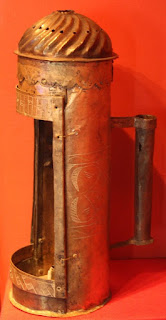
http://www.mirror.co.uk/news/uk-news/gallery/stunning-700-year-old-giant-9981913Torches, these are easy to make, and we've done it! They suck. The fire itself blinds you, in fiction, they always have the person in the lead carrying the torch, but it should be the person in the back, though it does get passed around a lot. The torch-bearer really can't see very far, you can't even see the ground which is a problem, and it is harder than you think to hold a torch above your head and out of your eyes. Even a lantern will do the same thing unless it is fixed with a shield, you don't want the light to be too bright, just bright enough.

Cab drivers who drove at night had to keep the flame itself out of their eyes, seeing the ground was imperative because of potholes. Nobody wanted to drive at night, even with a light source, because moving around is dangerous. People did it, but people also got lost on their own properties and drowned in rivers.

In regards to cave exploration, torches aren't the best idea. The best option is a candle, low levels of light to highlight your surroundings. They told you more than just your surroundings, the flame is sensitive to changes in air quality, professional miners preferred candles to lanterns, it wasn't just budget concerns. Even today you'll see a lot of miners smoking, they watch the smoke to see the air flow. Once battery operated light came about, that is when people started carrying canaries. 

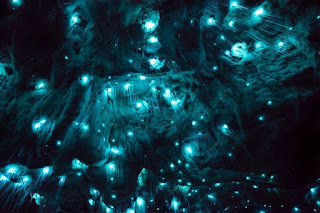
http://www.businessinsider.com/glowing-caves-photos-new-zealand-2016-11?r=US&IR=T/#the-worms-glowing-light-helps-them-attract-their-food--other-insects-5One would be shocked at how deep the old-timers got inside of caves, and these weren't professional spelunkers, these were just everyday locals who took some time off and wanted to see things that nobody else had seen. They used candles, and they'd climb deep inside of these things until they either got scared, ran out of time, or could progress no more because of the muck. They'd mark their spot with their name and usually the date, and these writings are still in there.

What does this have to do with D&D games? Nothing. We're dealing with fantasy, it is just easier to have tunnels that you can stand upright in, the rule-of-cool dictates a lot of stuff! I do give them raw caves to explore when I want to. Passages that aren't 5'x5'. I'll also get picky about supplies if that is the game, but we rarely play that game.


http://deventerburgerscap.blogspot.se/2013/08/visit-to-lund.html
Typically, I'll do the math and how many torches you bring in dictates how far in one can go and get back out again. I'm also a creep, demihumans don't need as much light to see in the dark as men do, and once a demihuman gets beyond the range of men, the underground world becomes more habitable for them, fungus and stones radiate light that they can see, but humans and normal elves cannot.

Elves can see normally at night above ground, starlight is enough, but it is reversed, the Dwarvish folk needs to carry a light source.

Candles are preferred, lanterns break, but the oil can be used to make a torch. To light a torch you only need one stick, but you've got to bring enough cloth and fuel with you. The problem with light is that it gives your position away. Enemy sentries typically sit in the dark, living spaces are lit, but that is it. Golin will sometimes light passages to help sentries see intruders sneaking around in the dark (if they are paying attention), so light itself is part of their survival plan.

The players tried to utilize the Permanent Light Spell, which works great in unoccupied caves and dungeons, but since you've got to put it out to sneak around, and recast it, it can be terribly expensive.

That is the game that we prefer to play. One of stealth. I have also found that it is difficult to put a torch out, the fastest way is with water, a slower way is to smother it with dirt, the slowest way is to tap and roll it around on stone, which is also noisy. I don't think that I've ever used these experiments in a game before. Maybe stripping it off with a sword real quick and stamping it out would work? That might be a fun game!

2123 Arms & Equipment Guide Review


I’ve talked in the past of luxury items, but what are they? In a nutshell, I identify them as anything that makes play more enjoyable, or faster but isn’t really necessary to play the game. Some of these are expensive, but they don’t have to be. One of the cheapest luxury items is the Arms & Equipment Guide which was published in August of 1991.

Oddly, this is part of the blue Dungeon Master Guide Reference Series, so players can’t reference it directly at the table; I suppose that this was done to help keep the DM in charge of the game, and out of the hands of rules-lawyers, but at this time TSR liked to give books to DMs saying that they were for THEIR EYES ONLY! Players who actually follow the rules might wonder what the heck is in this thing, and some clubs hate it when the DM makes stuff up, so the mystique behind the book might be appropriate in some cases.

There was a shift going on, I think that TSR overestimated that shift, but it was there, and it was breaking away from the published settings and doing some historical play, which had to be home-brewed. Of course the 2e rules had many historical components already built into the game, for instance Ring Mail isn’t something that you are typically going to find in a traditional fantasy game, and the prices reflected this. In the age of Ring Mail, this was the best you could get, and while they pointed this out in the core handbooks, there were lots of things in the equipment sections that were from different times and eras, all of it jammed together in one fantasy store, with no rhyme or reason other than to provide as much information as possible but at the same time keep the page count reasonable. That is where this book comes in, it defines more of the equipment found in the Player’s Handbook!

At the table, over the years I have had some odd questions, and I sometimes didn’t know the answer too, such as, “What exactly is a Bastard Sword?” “What’s the difference between a flight arrow and a sheaf arrow?” “What does my sling staff look like?” these are all logical questions, and since we try really hard not to bring too much mechanical mumbo jumbo to the table, I was always kind of forced to do just that.

I remember that one of my characters used a Morning Star for years, and I had no idea what the thing even was; all I knew was that it did 2d8 in damage.  Also, trying to buy food was always weird, why would a 4th level character want to buy an entire barrel of pickled fish, or try and bring along 250 gallons of cider with him to the underdark? Let’s not even get into equipment for mounts, I grew up around horses and still had no idea what all of that stuff was. Much of the equipment guide was ignored. Sure, there were a couple of explanations that players could read, but who really did that? Even if you did, it wasn’t really enough information to come to any clear conclusions anyway.

Is this all that is available? Four pages of stuff represents the entire list of everything manufactured or available in the world? For many DM’s that is exactly what that means. I believe that First Edition AD&D had a lot more available, but the prices were different. Actually the prices always seem to be influx depending on edition, which is just bizarre. But let’s refocus on this book itself.

In the past, if a DM wanted information they had to go to the local library, you really had to want to know the answer to go to the local library! This book gave as much info as it could for the low cover price. THAT is handy! Even today with the huge resources available to us on the internet, if someone wants to know what a bastard sword looks like I can quickly show them a picture of it, and tell them some of the information in Arms & Equipment  and have it all be relevant to gaming. Sure, you can Google Bastard Swords, but prepare to be swamped. We don’t want to simulate reality, we just want to know if this is something that our character would use or not: Nit picking, but without over doing it.

The book is broken up into five sections: Armor, Equipment for Mounts, Weapons, Equipment, and Clothes. It compiles not just the equipment found in the PHB but from the Players Handbook Reference Series as well as adding stuff from 1e and what I assume to be a few items unique to this book.

CHAPTER 1: ARMOR


Each armor type is given a full page of text and a full page drawing. The text always has a brief description, and a section that they called “Campaign Use” which they talk about things relevant to our games, such as who uses this, how long it lasts, how to quickly destroy it, fun stuff like that! Sometimes there are small variant blurbs to modify things, such as spiked leather armor, or adding optional rules if you want to.

Shields and their uses are also given a page, as well as helmets, which is nice! It helps us visualize these items better, but also gives us some ideas on their flaws. Running around a dungeon with a body shield is something that I have done, and it isn’t wrong if you allow it, but if you are playing with the optional encumbrance system to add challenge, you’ll understand the numbers behind it. You can better apply an improved AC rating to it, but one’s attack rolls would be impossible unless they have the right weapon, and even then that roll will be hard to make with any accuracy.

CHAPTER 2: Equipment for Mounts

An excellent chapter with takes medieval ideas and simplifies them for modern minds. Unlike the previous chapter, this one rewrites and replaces the rules found in the PHB, it sticks close enough to them that it doesn’t cause a problem, but for more advanced play it allows more flexibility and ease of use when calculating AC ratings for lots of troops. While this chapter may seem overly complex, it actually makes things easier and gives an element to our encounters that we wouldn’t have if we stuck with the PHB. Basically it treats a rider and mount as one entity instead of two, which honestly makes more sense.

This chapter is a lot more compressed then the previous one, it still has fabulous art examples, but the definitions and campaign use were squished together. Some examples also have some vocabulary words to throw at your players so that they have no idea what you are talking about and may become really impressed and shower you with praise and admissions of love and deep respect—probably not, but a very very slim possibility is still a possibility! Actually this book adds depth and options to play; it identifies some very specific equipment that can change the nature of an encounter based on technology. It also makes entertaining reading, which considering that this is a book about arms and equipment, greatly helps with getting through this thing.

CHAPTER 3: Weapons

This is the longest chapter, and has some interesting features. The format is squished when it can get away with it, just giving a definition, but it can also open up and really blow your mind with facts that are relevant to your campaign; some entries feature Adventurers Notes that are actually helpful, and/or boxed text of historical data. In most cases they also have artwork that show off different examples of the same thing, such as battle axes and maces.

Finally, I know what a Morning Star is, and I laugh at my DM for allowing me to use it in close quarters: HA HA HA!

This chapter also includes a Master Weapons Chart, collecting gaming data from multiple publications at the time and putting them into one chart; this includes all four of the basic Complete Class Handbooks, so this list is pretty handy!

CHAPTER 4: Adventure’s Equipment

Historical Locks
This chapter is not complete, but it does have examples of the trickier thing found in other sources, and gives pictures to accompany them. It defines and briefly talks about their use in your campaign world. It doesn’t tell us why we’d buy a barrel of pickled kipper, but it does tell us how we can get it up the side of a mountain!

It still doesn’t do much for food needs, but it does add a provisions category which helps us to figure out food costs by the week, it isn’t all that helpful as it squishes everything up into one tidy paragraph, but it is something.

Maybe the fact that when I first started playing we were broke and starving half the time, has something to do with my obsession on this subject? We’d spend a good deal of time talking about exactly what was available at the inn, how it smelled and how it tasted . . . we didn’t care about the logistics of moving eight hundred thousand gold coins out of a 9 level dungeon, but by god you’d better go into elaborate detail when it comes to describing the innkeepers stew because that stuff is what really mattered, dammit!

CHAPTER 5: Clothing

Clothing should be given more attention than what this book or the PHB gives it, there just isn’t much to choose from, and while this chapter is far from complete, it is a step in the right direction and allows a DM to come up with some idea for the cost of something. Not that we want to get carried away with fashion, but it does play a part in society. There are still some mental calculations that we’ll have to do at the time to get our characters properly fitted, honestly, TSR would probably have had to make a book on this subject, and while I’m sitting here bitching about it, there still is no way that I would had actually bought something like that, so . . . yeah, this is a great chapter! It at least gets us started so that we can come up with some mental core ideas, nothing that we’ll ever want to write down, but it gives us just enough to make stuff up when we need it.

OVERVIEW

There is something definitely missing from this book, an index! When somebody asks you what the difference is between swords, you’ll have to do some flipping to show them the picture, but that is the thing, the pictures are nice! Well, not all. The image given to us of Leather armor is pointless as the man modeling it definitely made his Hide in Shadows roll, but that is just nit-picking.

Is this the best book that TSR had ever put out? No. No it isn’t, but it allows some sense of order to be had from us laymen at the table, it allows options and in some cases shows us why some items are listed the way that they are. Some items are not as convenient as we give them credit for, while others offer the players more options than they might be aware of. Much of what is in this book helps us visualize things better, or make a decision easier. It isn’t one of those books that you have to sit down and read cover to cover, and it won’t be able to answer every weird question that your players can pose to you, but it will help, and unlike Google, all of the material in this guide is relevant to gaming. If we want to know more, Google is always there, but at the table, this thing will eventually pay for itself in convenience and mind-candy alone. 

I give it a C+, it is great for advanced tables, but can probably overwhelm some users. It is fast and convenient but totally unnecessary to enjoy the game. I still consider it one of the better luxury items that TSR published, but the fact that it isn’t as complete as the title suggests, and the lack of an index lowers the rate considerably. If all you want it for is to get info on weapons and armor, you’ll be very pleased with this book, if you are looking to have basic equipment identified; you’re going to be a bit put out.

As far as value goes, a fair price would be in the 20-25 dollar range, which is very close to its original cost. Most of these books are still in great condition, I was able to find a mint condition book for 10 bucks, but that is after spending lots of time looking and getting lucky, but there are deals to be found for persistence!

The Classic Player Dungeon Mapping Style


When I had first started gaming, we used a style that we don’t use anymore. The Dungeon Master would tell us very specific things about the place that we were in, and another player would draw it on graph paper, mapping our progress. The point behind this was not OCD, it was because we knew that we were in a labyrinth, basically playing “find the flag”, the map that we had told us where we had already been and gave us clues as to where to go.

We abandoned this style many years ago for something more descriptive, it wasn’t intentional, it just happened. Underground complexes got smaller, and easier to manage, I wanted the underground section to only last a session or two. We all know that they call it a “Dungeon Crawl” for a reason, it slows down the game. Most of my story would take place above ground, with the dungeon typically being the climax. They weren’t ever all that long, it wasn’t anything so advanced that the players really needed a map, they were more or less cattle shoots, my monsters were finite, I knew exactly how many beings were down there, they weren’t static, but it was possible for the players to kill every last one of them and successfully clear a dungeon.

If I had a feeling that the dungeon was larger than what can be accomplished in one session, I’d create rooms that could easily be made safe, the players didn’t have to worry about this. Once they killed the big bad boss, the scenario was over, they got their treasure, we calculated XP, and the next scene would take place back at the inn or whatever. All of this is incredibly lazy. It was instituted to make play faster, more story-like. Also, now that I think about it, more video game-like.

A few years ago, one of my players wanted to DM, he had bought the Forgotten Realms box set Undermountain and he never got a chance to actually use it, so I rolled up a character and let him DM. We had a great time until we found the entrance that we were looking for, then he suddenly started telling us how long the hallways were, how big the rooms were, boring colorless information. Once in a while he’d give us a real description, but not to often. We all laughed and ribbed him about it for years, assuming that he was just that rusty at game mastering. We had him convinced that the error was his, but now that I think about it, the error was ours.

He was playing a different game, we were playing one of our typical story driven games that we were used to, and he was playing that classic style of old-school D&D. Instead of listening to what he was telling us, turning around and grabbing the old fashioned graph paper, a ruler, and some tape; we laughed at him. Here is the deal, as soon as we crawled down into that hole, and failed to start mapping our progress, we were dead. Total Party Kill. We just didn’t have the sense to know that we were dead. Our characters are still down there, either dead from starvation, eaten by some hideous beast, or enslaved by something even worse. It didn’t end well.

Mega-Dungeons


I used to cringe at the mere thought of such things, today they are referred to as Underdark so technically they are still with us, but for the most part and by most tables, ignored for whatever reason. I think that the reason why we ignore it so much is that Dungeon Crawls as my table uses them today are incredibly slow, I cringe about drawing them out even further, and I kind of associate them with my early days of DMing, when I was still learning and not very good at all, but here is the weird thing, I didn’t hardly ever run this style of game. I quickly abandoned it and instead worked on descriptions and ways to bring NPCs alive. I played that style WAY more than I ran it. I associate it with our days of sitting down and actually drawing PC Player Sheets because we couldn’t afford to buy them. I also am always going to be in a state where I am unlearning, just when I think that I have all of the Edition lies wiped from my mind, I find something like this that is still there, and it is telling me that Mega-Dungeons aren’t fun. That they are old-fashioned and were just something that people used to do. That they limit games and hog the spotlight. I could go on and on, but none of it is really true.

As a DM I still prefer Graph Paper when doing my mapping. To me it is a lot faster and easier than using a computer. I have also gotten lazy about the size of my maps, esthetically, a one sheet map is pleasing, but what is esthetically pleasing isn’t always what is best for the game. I have also gotten in the habit of cheating with my maps. Instead of charting them accurately, I’ll make notations, like ‘This passage really extends 4 miles’ when the players hit it during play, I roll for 1 encounter and skip all the way to the end of the passage, which is horrible!

I digress, when we took away Graph Paper as a player tool, I feel that we dumbed down the game, there are things that this style allows that you can’t achieve when you don’t use it. While initially it is slow, and the DM will have to refigure how to accomplish his descriptions, we can do something that we can’t normally do, which is change the map. Advanced users enjoy making sure that their monsters aren’t static, but we do it in a very static environment, when the players draw their own map, we can bring the dungeons truly alive. We can damage the environment and cause the players to rethink things because they can detect them, they have their own map right there!

It also provides a game which your players won’t expect, typically, in your modern game once you find the flag (the boss), the game is over, but with this method, you now have the added challenge of navigating and fighting your way back out, while you are injured from your initial target. Actually escaping this thing successfully becomes a reward all unto itself.

 Reviving the Mega-Dungeon Concept

Drawing a map is a skill, DMs have it but players may not, so just handing them a sheet of graph paper and leaving them to it will probably just lead to frustration. Even if they had played this way in the past, they’ll need a little bit of time to re-acquire the old skill set, and we DMs will have to acquire it too, as it is really up to us to give them descriptions accurately so that they can draw the map. It is best to start gradually.

Create a Novice Dungeon, which will probably be bigger than what you had done in the past. You want lots of passages, but mind the doors! You are going to find things in this Novice Dungeon that you did wrong and only serve to make accurately describing the dungeons too difficult. During regular play, we can put 3 doors on the side of a passageway, but how are you going to describe these doors to your players in a way that they can map? Our design has to factor this in. It is fine to add detail, but pay attention to what is happening.

Perhaps it would be best to have the players find a map, which you hand them partially completed. The map itself is old and is now inaccurate, but they won’t know this. This map should have your basic symbols on them, Doors, secret doors, traps, ambushes, stuff like that, but it is only a partial map. At some point they will encounter a blockage, one that they can’t bypass and are forced to leave the safety of this map and start charting their own progress. Since this is a novice scenario, create the map with them. If they make errors, correct them right away so that they can fix it. This helps the DM too, you cannot allow yourself to give them bad descriptions.

INTERMEDIATE DUNGEON

Now we’ll play a similar scenario, roughly the same size, but have them go in blind. They will be creating the map, and if we were satisfied with our progress from the novice play-test, we’ll let them make this map independently.  We won’t help with the process, and not check it ourselves until the players have found the flag. Once the goal has been completed, we’ll ask to see the map that they created and check it. If it is inaccurate then they had failed the scenario and must find their way back out, but if they succeeded, you can start using the more advanced methods.

NOTES ON PLAY-TESTING

The focus need not be on play-testing, I’d suggest keeping it core to your campaign.

If you need to, light the dungeon the first couple of times. Once you are comfortable with this style, then you can start limiting the descriptions to just the field of view, which allows more of a complex dungeon to be designed.  The light will also clearly show the boundaries of our gaming scenario. Leaving the map should not be allowed until the basic skills have been mastered.

Traditionally, the deeper that you go, the harder the monsters, sometimes there are stairs, but sometimes there isn’t, it is a ramp that may not be detectable unless there is a dwarf, gnome, or Halfling in the party.  If you want to be nice, you can show them how to draw one-dimensional maps, a hall that extends under or over a room and doesn’t dead end is a clue that you’ve changed levels and it is time to start a new map.

PREPPING
Stocking a big map like this is exactly like stocking a large city map, you’ll have your triggered events, but mostly it will be randomly generated, so put some care into creating your tables. It helps to break the dungeon down into sections, with each section having its own random encounters lists.  It doesn’t hurt to have non-combat events either, but make sure that these are temporary, if they aren’t, you’ll have to add them to the map.

Drawing always aids my creativity, I think about ecology and what is happening in this place. The dungeon itself tells me a story, for the most part, the halls are made of either rough or worked stone, if this changes, if they enter a section of hall that has something different than that, then I will tell them.  I don’t make a complete key, as we don’t know what rooms the players will and won’t explore, and I hate doing too much work. Much of the fine details can be established during play. I might mark a trap, and then if the players stumble into it I’ll iron out the fine details. The most important thing is the maze itself, this should be logical, as we’ll be using the structure to give clues.  If the players fully map around a small section of map, that may indicate a secret room. It is okay for halls to dead-end, this place is old and has been modified for centuries to fit the needs of different occupants.

ADVANCED PLAY

This style is very easy to master, and its benefits are to be explored. We’ll be able to do things that we couldn’t normally do if the players didn’t make a map; Things that normally would present problems, or have to be rehashed over and over again. They shouldn’t be mapping just to map, there should be a benefit of some kind, it will allow them to avoid traps, and ambushes, tell them where they had been so they don’t run around in circles. You can make weird effects happen, like all of their metal equipment turns to wood when they walk through a pillar, when they walk back through it, the effect reverses. You can get really creative and wild here!

If you had never done this before, then there are probably some things in the handbooks which may not had made sense to you before, that could be because it is assuming that you are playing this style, it’s built into the system. In this environment it is safe to really cut loose, make it as deadly as you want, all of those unfair monsters that newbies bitch about, this is where you use them. They don’t have to walk through a section that is trapped, it is faster, but they’ll pay with damage, they can take a different route if they want to, or this was planned and they have to walk through it on their way in, weakening them some, softening them up for the enemy, or maybe it will work in their favor, perhaps the enemy thinks that since that section is trapped, then they won’t expect an attack from that direction?

This system is meant to make tracking the passage of time easier, 1 session typically = 1 day. Spell casters should prepare their spell lists, and it makes it easier to calculate expendable equipment, such as torches, lantern fuel, and food/water. Resources can play an important part in this game. 1 hour of real time, can equal 1 hour of game time.

This map is also equipment, and subject to the laws of physics, if the player who is drawing the map is blinded, he can’t draw his map, nor can he see it. If the party irritates a fire-breathing something or other, the map must make a saving throw or burn.  You can be as mean or as nice as you want. If the map is destroyed, then take it away.  It is best to spend money on some nice paper, and figure out a good method of drawing, as well as a case of some kind because everybody’s lives depends on keeping this map safe! Especially in the lowest pits of the earth where light isn’t welcome.

SUMMERY

I don’t know about you, but I am a much better Dungeon Master than I was in the 90’s, and I think that if I apply all that I had learned over the years, and put it into this concept that I can really rock this out! What I refer to as “stories” actually has been reduced considerably, and my underground sections have gotten admittedly stale compared to my wilderness games.
How about you? Have you ever played this style of game before? Are you still playing it now, or did you abandon it as well? As a player, would you be interested in this style or not? Let me know in the comments below!


Statcounter

Contact me at Ripx187@gmail.com

Search This Blog