Showing posts with label rants. Show all posts

The TSR Code of Ethics

An interesting article has popped up over at Shane Plays about how TSR had a "Code of Ethics" that might be of interest to you. Go ahead and pop on over there and give it a read, I'll wait here.

http://shaneplays.com/rpg-history-tsr-code-of-ethics-dd-comics-code-authority-rules/#codeofethicsimages


Oh! You're back!

The whole time that I was reading that, I kept getting images of all of the times that they broke those rules. Ultimately, the documents are worthless, or were they? Sure, they broke a rule here or there, but I can only think of specific examples. For the most part, they DID keep to this Code, and they did so at their own peril.

This goes back to the Satanic Panic, so they say, but what really happened was that TSR wanted to bring their product to the mainstream market. What they did had nothing to do with "Keeping Children's Minds Safe", the very idea of a normal someone suddenly losing their mind and identity to a game is insulting. This wasn't done to make the Pope happy, this was done to make INVESTORS happy. Investors who had no idea what in the world that this product was, but they weren't going to let a little thing like that get in the way of wanting to control it.

The Golden Age of Dungeons & Dragons, back when D&D was Pop Culture. Back when it was a set of tools and rough ideas which you the user used to create your own adventures and told your own stories. Those days were gone. Now TSR was into telling you what the stories were, and they were safe, sanitary, and bland . . . unless of course, that got in the way of TSR's profits.

TSR controlled the monologue, and they have always done this well. Heck, they convinced us that 2e was a new system that was even better than the OLD crummy AD&D, when it was just the same system but clamped down tighter so that they had better control of the product. I'm not even convinced that 2e could really even stand on its own; during my games, I've always got to go back to 1e because it was just more fun! How many 2e books do you need to do the work of the 1e DMG?

Yes, yes. I know that this is a 2e Blog. I enjoy the rules, but that doesn't mean that I'm drinking the Kool-ade and liking it. Whenever you spend time with these products as we do, critical thinking is crucial, and I don't always like what I see.

Like many users at the time, I was addicted to modules. TSR had me believing that it was just too hard to do this myself, and that I didn't have time, or that my work just couldn't compete with the fine Professionals at TSR. I was a sucker. TSR didn't want you to see how easy it was to do it yourself, so instead of spending hours writing my own material, I'd spend days fixing their modules and tailoring them to fit my group. Some of the things on this list I changed, but looking back, it wasn't much. Somehow they managed to get me following this code as well.

That said, if one thinks about it, this code defies the very nature of Role Playing Games. It defies what it is that we do. We are talking about a medium where anything can happen, and the possiblities are endless. What if we just don't care that the hamlet has problems with trolls, they don't have to live there, and if trolls are making things dangerous, why risk my character on protecting these fools who want to live out in the middle of troll country? Why would I want to kill all of those goblins when I can enslave them all and have my own army? This NPC who invited me into his house and is described in detail is no doubt the villain, why not just kill him now while he isn't expecting it? Then you've got the DM that says, That isn't the way that the story goes! But isn't that the whole point behind the game?

Further Reading:

Trollsmyth: Abandoned Territory

Can World Building turn into a huge Red Herring?

Hey there Party People! Just popping in to say that I'm not dead, though we did have to cancel the last session because of the Flu, which was a bummer.

So what have I been up to while not updating my blog? Well, I've been prepping. Been second guessing myself a lot as well. I've got my major notes but I've noticed that I spend a lot of time crafting things that ultimately serve no purpose other than to expand a culture or project color. Things should function on multiple levels, aesthetics are good, but not when they distract away from ideas. I think that I kind of overwhelm my players with unintentional red herrings.

That said, I am working on tightening my focus, at least when it comes to preparing my notes. I know as a player I always hated blank worlds. I can't tell you how many times I played and the world was just too bland. I may had gone to the opposite spectrum. Designing an entire session based on just getting to know a foreign environment. Is that boring? We only get to play every forth Saturday, I really need to keep things moving.

Speculation on the Wargames biggest influence on D&D

There are camps in the RPG community, those that prefer to campaign, and those that don't. Where did the idea of campaigning start? The answer is that its roots go back to wargames, and I can see how this came to be.

There are two kinds of wargames: your standard single games, one and done, and then there is a much more difficult game which is the campaign. In the campaign, you've got to preserve your troops as those who survive will be moving on to the next game. It changes the way that we play completely! But, why do we do this?

I was playing a WW2 game, and I saw that the enemy was going to take a city. My best course of action was to withdraw and move as many units as I could to a more defensible position. It didn't look good, I had made a mistake and my opponent was capitalizing on it. He was going to overpower my major artillery and take it all away if I didn't play my cards right. I was looking at a losing game.

Enter the 3rd Infantry. These guys were tough, I knew that but I had to sacrifice them to get my tanks and less tough infantry out of the area, so I ordered them to hold their ground for as long as possible so that I could move the majority of my forces back behind a river. I didn't know how long they could hold it, but if I didn't I was definitely loosing everything.

It was at this point that something extraordinary happened. The 3rd Infantry held. They were blasted by everything that the enemy had, but through lucky rolls and fate this piece not just held its position, allowing me to retreat without taking losses, but it was destroying the enemy. I was even able to get the 3rd Infantry out of there as well, once their job was done I was amazed. It was so much fun watching this take place. Once I got them out of danger I moved them behind my lines and didn't ask any more of them. They were very beat up and another attack on them would have wiped them out. I felt something for this unit. Even though this was just a game, something in me felt proud in that little marker. It became more than just a marker, it had guts and stamina that I had never seen before.

I ended up wining that game, all because the 3rd Infantry had done their job. I enjoy this game and played it again but the 3rd Infantry was no longer the stoic band of heroes that it was during that game. Even in winning that scenario they were gone at the end of it, never to appear again. I still treat that piece with reverence though. I remember what it had done as if it was a real thing.

You see this in wargames. Specific pieces do something that is so surprising that they become important to the player. We want to know more about them, and a story took place. We use them again and again! When we are playing a campaign, that specific band of heroes can continue. We'll treat them differently. For me; even though my tanks did more damage, the 3rd Infantry was still my favorite.

I am sure that Dave Arneson and Gary Gygax felt the same way about specific members of their forces. They became more than just a painted piece of lead, this piece did great things once! What if we could break that group down and play them individually and that is the point of the game? We can learn even more about this unit! That sounds like fun! And it is, we call it D&D.

I myself prefer campaign style, especially when it comes to D&D. No one-shots, I want to see my character succeed against bad odds, to fail on his own terms, to be more than just a cardboard counter, a little lead sculpture, or a collection of digital 1's and 0's.  D&D allows this to happen in a way where even folks who never had an S.S. Panzer  Division tear into their enemies like an unstoppable monster.

Game of Thrones > Le Morte D'Arthur

On the GOOGLE+ community Literary Role Playing Game Society, our Friend, Vb Wyrde from Ethos RPG made an interesting comment the other day in regards to Game of Thrones, I responded and have decided that I want to keep this response for future reference as I feel that this is a good summary of my current thoughts in regards to game design. Click here for direct quote.

The Gamemaster can write the past, but the players write the present. The future belongs to the dice and cause & effect. The Gamemaster can influence the present, just like the player can influence the past with good ideas but when a DM tries to write all of it then they aren't playing the game.

The story is a bi-product of play. Our brains just do that. We put stuff in order. We make order from chaos. With that said, I think that one of the game's strengths in regard to the medium is that one can lose, one can lose big! And while a computer would shut the game down, the movie would grind to a halt, the table-top RPG keeps going, and will probably be more interesting because of the loss.

Game of Thrones is a magnificent muse for a homebrewed setting. An excellent example of Feudalism at work, the mythology of the land, the cities, and the ruling houses . . . specifically the mythology of the noble houses. This isn't anything that I've ever thought of doing before!

Hell, I would say that how they present Knights is a game changer too. In the past, all of my knights were based on Lancelot, a knight who failed, betraying his king, his family, and himself.

Watching it, and marveling at the world they built. We can do that. Making our NPCs more effective, especially in terms of back ground movement.

I think that many of us base our games on the legends of King Arthur, but this was a cautionary tale. Arthur and everyone in it failed. The politics implied aren't all that well defined. I think that Game of Thrones provides a much stronger picture of life in a feudal society.

The Gay Agenda vs. AD&D


When I was a teen the world was a different place. My generation was one where we excepted the freedom of blacks, my grandfather hadn't yet, but he learned. Now the folks who are homosexual are dealing with acceptance, and just as my grandfather before me, I saw a dumb idea that was taught to me for what it was.


I don't typically express my own politics, but this really isn't a political issue. This has to do with basic human rights. Hate is hate, and hate is wrong. If a dude wants to marry another dude I don't really see what business this is of mine. It's not hurting me one way or the other. If that family wants to adopt kids, cool! Better then the alternative. I know the system and the system is not a kind place to be trapped in. I guess that this is political isn't it? But, I still think that gay people make better parents than idiots who rally against it.

As far as my game is concerned, I'm not going to limit it by not exploring the subject. It is just too interesting not to incorporate it. As DM my job is to make your character's lives as difficult as possible, regardless of faith, race, or creed. I'm an equal opportunity trouble maker. As a player I've played female characters, as well as gay ones. It is Role-playing! Why would I want to play myself?

I've seen examples of DMs treating players really badly. They do this because they are dumb asses, and I don't play with dumb asses. I do, however, steal their players.

At my table we explore politics. Not our politics, mind you, just politics in general. All table top RPG games are political games. We each have the right to use stereotypes, enforce bizarre laws, target minorities with slavery and violence, not to mention actively engaging in genocide as this is a sound strategy. As Dungeon Masters we cause problems, and if the players don't go looking for trouble, well then, we'll make sure to bring that trouble to you. Through exploring topics which are difficult to swallow, we become better people. It need not be in your face, nor should the DM be on a soap box. We don't judge our players, we judge the game. Politics move the game along, and bad political decisions become speeding hot rods. With that said, there is a difference between being a dumb ass and playing the game. In the game, if the players are interested in creating social change, they can. That is the point.

If you want to repress women, create racial slurs, and execute pillow biters, do it, but allow your players to cause social change. If somebody complains that you're being a pig, just agree and challenge them to do something about it. We can't fix idiots in the real world, but we can in ours.

This honestly shouldn't even be a problem, and I doubt that it really is. The person who made this an issue is no better than any other hate mongering pig and deserves to be treated as such.

The Role of Woman in D&D

Joan of Arc
Oaks Spalding, over at Save vs. All Wands has been discussing an article written by a lunatic with too many readers and a rather low opinion of women. I think that there is some validity to the subject that she is writing about, but because of her personal arrogance, she can't write about it and be taken seriously. I'm sure that professional women within the industry did get the shaft, but that may have been due to standard office politics of the era.

As far as private games go, they are all different. All players are different too, but there are risks that we take. These risks apply not just to women, but to the younger crowd as well. People can take advantage of others, and I do believe that we do a terrible job of policing ourselves. We aren't exempt from predators, and while I know that there are a lot of decent people who won't sit idle while somebody is getting worked over,  there are still too many in this hobby that will do anything to avoid confrontation and just do nothing.

The role of women in gaming goes beyond characters. They are leaders, innovators, muses, artists. Are they properly recognized? I think that they are now, however, if they were properly compensated for their efforts is a different subject altogether.

It does feel that men have an easier time getting new ideas accepted and that women either take supportive roles or are forced to stay in them. I think that the greatest influence that women have had on my game personally, is in regards to story. I've pulled back on story-based gaming, but it has been said over and over again that the players (both male & female) want to know that this is going some place. They like reoccurring characters, they like slippery villains, they like having things going on in the background. They like long-term story arcs, and being able to walk around in a storybook world which reacts to them.

This, I have found, can be accomplished without forcing the players to play a linear story. I know that many DMs have a hard time grasping these theories, they translate into terrible modules, but the idea isn't creating a scripted game, the idea is to have a script running in the background which must be written and rewritten as the game progresses. My players love to be challenged by a railroad designed into the game, and it is their job to get off the tracks.

https://en.wikipedia.org/wiki/Laura_Hickman
Some can credit other sources for the interactive story, but to me personally, it was Laura Hickman. She is co-credited with her husband, Tracy, but it was this format which got me started. The modules required a lot of cooperation from the players, but the principles, once separated and broken down into their basic components, showed a very advanced approach to game design and theory. Not settling for JUST Dungeons & Dragons, but constantly redefining it, and molding it to fit a larger vision. Creating worlds where there is something going on, a meta-plot which stays in the background. Defined objects that have meaning and history.

Laura taught me the joy of background. She gave me the courage to redefine old ideas and not be afraid to put elements of myself into the mix. It has taken a long time to find a good combination of old and new, but the effect that it has on the game is amazingly satisfying for everyone. I think that it is a warmer, and more personal game than just enforcing the same rules all the time.

My wife yells at me when I stray too far from this path. She reminds me that she and the other players can go anywhere to play Greyhawk or Forgotten Realms, it is my mind that everybody enjoys crawling around in. The men who play are of the same opinion, but we don't talk to each other like that.

"Bulgar Warrior" via: Pinterest
Perhaps it wasn't Laura who started me on this path, she just gave me something solid that I could study. It was the DM who was my best friend and years later would become my wife that taught me this lesson. She would run games with no Boxed-Setting, and only the memories of the world that she had played in when she was a little girl to guide her. Her games were way more advanced and personal than the rest of the club member's were. It went beyond just exploring castles and dungeons, there was stuff going on, she would beat us up and we'd have to crawl our way back up from the agony of defeat. NOBODY was doing that at the time. The YOU WIN! Games had already taken hold. She could infuriate you, but you never felt discouraged. This came naturally to her. Me? Not so much. Adding emotional and psychological elements into the game without causing harm, that is a skill that men (or at least I) had to develop over time.

Emotion. That is the magic element right there. Tragic villains with motivations beyond just because they are evil. NPCs with nuanced emotional ranges beyond those found in the average cocktail weenie. These are elements which I learned from playing under and developing games for female players. I don't think that I would have ever gotten there by just running games for a group of guys, and the guys who do learn to play this style have a very difficult time going back.

Gothic Earth Session 10: Return to the Haunted Belalp #3

via Pinterest
Played last weekend and it was fantastic! The players didn't know what to do next, session 9 had been an intense investigation that ended with a conclusion. They had no leads and low morale. The Village of Belalp was going to have a big party celebrating the end of the Witch murders, and the biggest scumbag in town made it look like he was the hero. Oddly enough, the players didn't want to attend this party.

I figured that this would be a good time to head back to Belalp #3, and have a dungeon crawl. This would be their 3rd trip down into its depths, and there is a lot to do down there, so it was a good time to open it up some more.

 Designing Kobolds

In Switzerland, the word for Fairies is Kobold. Above ground, Kobolds are seen as benevolent and helpful nature spirits, but below ground, they are twisted and evil. I've been using the word Kobold as well as Tommyknockers. The mine is haunted, but not all of the spirits in the place are dead.

I had never run kobold monsters. Never! In my power-gaming days, I saw them as too weak. They are weaker than the lowly goblin. As a DM, I just never had a place for them. Goblins in my worlds usually take the spot of booby trap-ambush experts, so in the book they stayed, until this dungeon.

I modified them some. I gave them a natural ability to turn invisible at will, and added “Spook”. I wanted them to be different, so while my goblins are traditionally forced into the wilderness, these sneaky things can quietly live among us. They are physically weaker than goblins, even a child could beat one up, so psychologically they had to be different, they depend on people. They are expert thieves. They rely on these skills to survive and are happy to live like rats. For the most part, their traps are designed as warnings and are more insulting in nature than dangerous, however, they rely on very dangerous traps to keep them safe. The tripwires for kobold traps are a bit more ingenious than Goblin's need. Traps are their primary method of attack, but for the most part, they are not nearly as aggressive as goblins are.

THE MINE
via Pinterest

The mine is a tricky dungeon. It is designed to open up over time; I don't enforce this; if the players find a secret door they find a secret door. It features a backstory that evolves and tells itself through play; it predates human history, first opened by Gnomes who lived here for centuries. Romans and Medieval men moved in to terrorize them, it was always the same story, the gnomes would allow the humans to share the wealth of the mine, as long as they kept to their sections, but without fail the humans wanted the whole thing for themselves.

There was a massacre, the humans crossed a line and murdered gnome women and children, ancient blood ran in rivers. The survivors of this genocide swore revenge, and something within the gnomes minds became twisted, they killed every last human in that mine. Not just killed, this was not war, this was murder. After the deed was done, and the Adrenalin wore off, they had time to reflect on what they had done. They had won nothing. Their families were still dead, they were still alone, and one gnome, in particular, believed something else; that he was cursed. He murdered his accomplices while they slept, leaving him totally isolated and insane. Rage was his motivation, it was all gone, the gods had abandoned them, and existence itself was punishment. He is still here.

This story is told in the Gnome section of the mine. This area, hidden from the main mine through residual illusion and kobold ingenuity, is being used by a small community of kobold miners who work sections that the humans don't.

There are other mysteries to be discovered in regards to the kobolds, but that is the story that the players have learned so far. Communication with them is very difficult, both are reduced to drawing pictures in the dirt, or pantomime.

The players stumbled upon their living quarters and stayed passive. Some communication was accomplished, the kobolds knew that if they attacked they'd be slaughtered, they'd die fighting if they had to, but they didn't want that. The kobolds were able to ask the party to kill some nasty spiders who also lived in these gnomish tunnels, which wasn't too difficult for the players, but impossible for the kobolds.

Heroic NPCs, how much is too much?

I was able to get my two wizard NPCs some XP, they are low level and both were able to use spells which the players themselves didn't have access too. I like playing them, they are totally in over their head but have no idea. This game the players had to first find them, they had gotten spooked by a kobold and when they ran, they put out their candles and were now lost in the dark.

Playing NPCs of this nature is a challenge, you don't want to take anything away from the players. You can give hints sometimes, and I often forget that they are even there, I got caught not rolling Saving Throws for traps. I coughed it up as NPC immunity, the odds of them making their saves would be annoyingly terrible and only serve to irritate the players and me. I want them there.

I got the idea from watching a show on the Syfy Network called “Ghost Mine” and wanted to incorporate it into this story. They supply the motivation to keep this mine open. If they die or aren't there, it will close and have economic repercussions on the village of Belalp which really needs this place to survive. If these investigators aren't there, the village won't be either; else the party will get paid to work here full-time and that isn't what this adventure is about either.

The mine is a piece of the Belalp Puzzle, but it isn't the point of the adventure. Is it railroading to keep these NPC's hiding behind the party, or as safe comic relief? I don't think so, they are an element of the design. They are open to attacks; when picking targets I remember that they are there, but they aren't destined to die in a trap. Not yet at least. If they bite it during an attack, then we'll deal with that. That is also up to the party. So far, they feel responsible for the safety of the investigators. One almost got eaten by a giant spider, and they hustled, took risks, and were able to save her. When she used her spell, it also furthered the story.

 1st Level Mage To The Rescue!

The problem was a weird one. The spider webs chocking the hall needed to be burned, but nobody had any torches or oil because the cleric was using magic to light the place. The wood in the gnome ruins is ancient and not fit for anything. The party was going to have to go all the way back just to get something to burn the webs out, which was boring, so I offered up my NPC. She is a horrible wizard who has no confidence in her abilities, but she had gotten the spell to work a couple of times. She told the party that she needed some components which could be found in the area, namely bat-poop and some spiderweb clippings. She ground it up and made a powder which she poured into her hand and blew onto the webs, then she said the magic words . . . and! Nothing happened.

She apologized for getting everybody's hopes up when a web shot out of the passage and got her, quickly pulling her in. Without even thinking the party all raced through the webbing, everybody getting stuck but one person who was able to get a hold of the NPC's foot, and THEN the fire spell was activated, forcing everybody to make a saving throw vs. spell for half damage.

That, to me, was more interesting than having to leave the dungeon. They got to be heroes, and I got to burn them all, so it was a win-win. Was I manipulating the game? Yes, but sometimes I think that the DM has to. This scene needed a bit of spice, and I wanted to remind the party that the investigators were there. They had to serve a purpose. Do you think that I over did it?

The hall was cleared and the creepy spiders were dispatched, opening a hall that hasn't been seen by even the kobolds. That is where they found the bulk of the gnome story, in a room, at the end of the hall is a temple to a Gnomish God, the floor glittering with huge piles of cursed gems and a pickax stuck in the statue of the god. The heroes were able to pry that pickaxe out of the statues head, hoping that maybe that would end the curse . . . it didn't. The mystic used her sense of touch to learn what had happened in this place, it wasn't perfect, but she does know that the angry gnome who put that pickax there still haunted the dark.
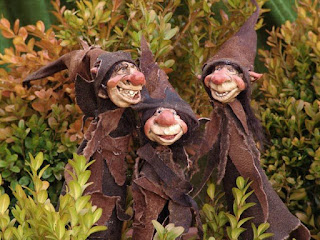
https://retrorpg.wordpress.com/2011/04/13/kobolds-in-germanic-folklore/

Instead of murdering the kobolds, they figured out that the things were using an ancient gnome press to mint coins. Why they are doing this, the party has no idea; well, actually that isn't true. They have an idea, but they don't like it and aren't sure what to make out of it. Anyway, they decided to pay the kobolds off and figured out a way to tell them that the mine was to be shared. They could work their section, but they had to leave the human section alone, and not scare or attack any more miners, nor sabotage any more equipment. The kobolds agreed, and the mine was reopened.

Zudet?

In regards to what the kobolds are up to, they got a clue. One of the kobolds pulled out a small bone statue of a dragon, calling it Zudet. The PC Wizard, instead of going up to the village right away had gone to the city of Brig to research the area and had found mention of a medieval settlement somewhere in the mountains called Zudet Castle. He also learned that an archaic name for the Alpine Skinks that infest the area every Spring and Summer is “Spawn of Zudet”. Is Zudet some kind of Pagan god? A symbol of some kind? Or is the statue literal?

There has been other news in town! But, that will have to wait until next game. This one is in the bag!

Suggested Blog Post, and an Anti-Module Rant (Free-Writting)

I am working on an article now, and it isn't ready. I do, however, like to try and post something at least once a week, this will be one of those free writing, unedited, first-draft things, so consider yourself warned.

Oaks Spalding has been doing some phenomenal work on his blog Save Versus All Wands, my favorite being "Why Do Player's Enjoy Being Puppets?", there is also a link in there to another good article where he defends Gygax from a younger user of D&D. Both are very well written and if you haven't seen them yet, well, there they are.

Now at the end of the article, I would like to point out a comment. A very negative comment that is strange, apparently there is a large enough caucus of people who believe some strange things and are loud enough to be heard. The most obvious belief is that there is only one way to play the game, and that is through modules. I've seen this opinion crop up a lot in the last few weeks, and it is okay to feel that way. If modules are your thing GREAT! They personally bore me to death, but to each their own. What bothers me is the aggressiveness of the campaign. At first, I thought that it was a joke. Many of us are networked together to take the game back from Corporate America and restore it back where it belongs, at the table.

Our goal should be a simple one, remove all prep. Run a game for anybody at any time any place. Perilous Dreamer from The Ruins of Murkhill is an example of a Dungeon MASTER, notice the stress on the Master.  We call ourselves Dungeon Masters, but for most of us, we're students.

I have studied lots of modules, I've got a good collection of them from all different eras. I have never run most of them, modules to me are more trouble than what they are worth. They say that they help you save time, but I must be doing it wrong because after reading, memorizing, correcting errors, tailoring it to my table, chopping it up so it's better organized, adding to it, cutting out garbage, I spent more time prepping the thing than I ever have just done my own thing.  The worst part about modules is that, without fail, half way through, after I'm done prepping the thing, I get bored of it. I had played this game during prep, I don't get to play it at the game table. That, to me, sucks. Another thing that sucks is that at the end of the day, this wasn't "OUR" game, it was somebody else's, I was just an editor. I felt like this soon after DMing and getting screwed by TSR, and being tricked into thinking that it was a failure of mine that my setting doesn't comply with the latest and greatest published version of it.

By studying a good variety of modules, and being critical about the content, figuring out what works, what is a trap, what we hate or love about something, I learned what has been done already and can begin making my own design choices. The game is customized solely for those who show up on gameday. I am no longer studying modules, they are repetitive, repeating the same formula over and over again, the newer the module the more it hides its formula but the formula is still a repetition of the old ones.

I have found fresher ideas by directing my studies to war games. I find that applying wargaming theories to D&D creates a more open world that feels more complex than it really is. A story does not have to dictate progress, I enjoy that element, but I am not a slave to it. Committing to actions, making decisions, interacting with the world around them, that is what dictates progress. In a video game, if you lose a scenario you have to try again until you win, this isn't the case in D&D. That is part of what makes it work, if you fail, the world doesn't stop, it keeps going.

I used to think that the DM was in charge of the content, but they aren't. The player is. The DM designed things, but the more open the better. If you have an interesting design, the players will do their damnedest to find it, and if you did a really good job, then they won't even notice that they haven't found it yet.

If the story plays itself out as a reaction to the players, constantly changing and morphing into something that was not predicted by the designer, is it actually a story, or is it something else?

This stuff all sounds very complicated, but it isn't. The only prep that I really need to do prior to the game is to mentally put myself in this place. If my players are at a loss for what they should be doing, I can give them different options, but typically this isn't the case.


Balance By Design: It isn't what you think it is

http://mythcreants.com/blog/four-reasons-balance-matters-in-roleplaying-games/
Folks around here hate the word “Balance”, and I get it, there is no movement with balance. I myself am on the record as stating, “When the players can try anything, there is no such thing as balance.” Yet, you look in the books, and you see designers talking about balance all the time, and they insist that it is present. 
There is a problem in translation: for most of us laymen, we associate balance with equality. Chess is a seemingly balanced game. Everyone starts out with the same amount of pieces in the exact same spaces and it is all equal until play begins.
Chess, however, from a design standpoint, is not a well-balanced game. It is a game of skill: while two people of the same skill level can enjoy the game, the most skilled player is always going to win. There is no way for me to beat a chess master, I may enjoy getting clobbered, but the skilled gamesman is going to win every time.

To best examine the inner-workings of game balance as it applies to Advanced Dungeons & Dragons (since it is such a hidden system), we'll look at another game that is popular and itself providing a giant leap in game design: Axis & Allies (A&A). There is no game master, so the rules controlling the game are all out in the open, it hides nothing. A&A is a strategy game, but like D&D, it is also both a team and an individual game.

http://avalonhill.wizards.com/games/axis-and-allies


Setting up the game and playing it for the first time, A&A doesn't appear to be balanced at all, however, it is, very beautifully so. On the surface you've got the Axis powers, they appear to have the best position: their forces are centralized and they have the most powerful military, however, as the game progresses this balance will shift during play. The Allies are able to build units more quickly than the Axis.
  • The early game favors the Axis 
  • The middle is equal
  • The late game favors the Allies. 
The balance of the game isn't fixed, it fluctuates, thus it dictates  different strategies. The Axis have a limited amount of time to win the game through offensive force, while the Allies are playing a defensive game, slowing down the game as much as possible to give them time to gather their strength. That is a balanced design. 
https://boardgamegeek.com/image/126739/axis-allies

The balance in the game isn't equal; play is dynamic and allows everyone to play the game on equal terms, regardless of skill level. Sure the odds are in favor of the most skilled player, but they can choose more difficult countries to run, and give less skilled players the easier ones. Victory isn't just dictated by skill alone, nor does it depend simply on luck, these things factor in, but that is what makes this game so playable.

More in relation to D&D, A&A is a team game, if the players who are playing the Allies don't work together, they are going to get annihilated. Like the D&D Fighter, you have England, it has a huge army, however, it is scattered around the map, not centralized like Germany. England has to give its allies enough time to build up their forces, but at the same time, if they sacrifice too much then their removal from the board will cause the downfall of the Allied forces.

You have the United States that begins play much like the wizard class, it is weak but it has the potential to become the strongest force on the board, but even at its most powerful, it still needs England. Each nation has it's own group strategy, as well as a personal strategy. Each nation is different, some are so difficult it is almost impossible to play, but skilled A&A players gain respect if they are able to master them.

This is all esoteric really. Let's move on to something that more closely resembles D&D.

The majority of users don't play wargames, but the original designers did. Wargames teach you a new definition of balance and how it applies to the D&D system. Let's set up a simple scenario:

You've got a Prince returning from war, he's been gone for a few years and the Regent really doesn't want him to return, everything was going so great without the Prince!

We'll set up our scenario out in the open, the Regent has chosen a spot to do battle on the road. He wants a nice open space to use his superior numbers to his advantage. His units out number the units of the Prince three-to-one.

To make things interesting, we'll give the Princes men more skill and a higher morale rating than the Regents troops.

Who is going to win? Will the Regent's numbers overwhelm the Prince's elite but battered troops? Or will the Prince be able to break the Regent's defenses and move on to retake the capital? We don't know. We could probably run this simple scenario a few times and have different results each time. That makes things interesting, and while it doesn't appear to be balanced on the surface, it is.

If this battle was perfectly even, we could decide it all with a percentile dice, but since each side has weaknesses and strengths, we have an interesting scenario that is worth running on our table.

Balance isn't about keeping things fair, it is about keeping the game interesting. 

If we introduce a dragon to first level characters, we should strive to end up with a scenario that they will lose, but can survive if they are skillful and a little lucky. Something has to be there which allows escape or an equalizer of some kind, even if that strategy is to run like hell and regroup.

But are the players actually beaten? Now the players know what they are up against, and can start a defensive game to minimize the creature's influence until the players feel they are strong enough to challenge its power or come up with a scheme which gives them an advantage over the more powerful opponent. The DM can kill them at any time, but what would the point of that be? In this case, we balance player skill vs. the chaotic might of a dragon. Who is going to win? We don't know, not until we run it.

Balance has nothing to do with keeping the game fair, or even. A high-level wizard is still going to need the protection of the fighter if he doesn't then why make the fighter play at all? On the same note, the low-level wizard is still able to contribute, he isn't just a liability. This is balanced as well, but that enforces the idea of teamwork and really isn't our problem. The players still have to pick their moves based on individual and group benefits. The better the team, the cooler the adventures that they are going to have.


Additional Links:

Nerd out with me:  'Axis & Allies' - A Buyers Guide

GAMEMASTERING: Style or Evolution?

http://www.bbc.co.uk/timelines/zq8gcdm
Youtuber Kevin Mason recently did a video on a subject that got me thinking, I encourage you to watch it, he identifies several styles of DMing and discusses the positive and the negative aspects of each. Here is the link so that you can go view it, Gamemaster Style: What Kind of Gamemaster are You?

Kevin Mason identifies four different styles:
  • Rules
  • Story
  • Fun
  • Balanced
It got me thinking, I have been all of these extremes at one point or another. When I first started out, I was very Fun. I catered to all of the player's desires and did whatever it took to get people to play at my table. That wasn't the only reason why I did it, there was also the fact that there was so much cool stuff in the DMG and I wanted to use it all at the same time! This, of course, got boring and convoluted.  It did help me figure out how lots of things worked, just throwing everything out there and seeing how things function. Sure the game lacked challenge, but it was a stepping stone.

What if the game is teaching itself to us? We all see these examples floating around, we suggest to new gamemasters to avoid traps and perils, usually from our own experience, but what if that is exactly what we are supposed to do? We learn more from making mistakes than we do from somebody telling us anything . . . at least I do.


https://cathleentownsend.com/2015/11/30/14-stages-of-self-publishing/
My next evolution was one of story-telling. I wrote overly detailed notes and didn't realize that I was removing the players from the scenario. In essence, I was playing the game during prep. The story was great, and my players did enjoy this aspect of the game. Mastering this state is also one of trial and error. Spending 20-40 hours prepping an eight-hour session is a waste of energy. I learned by cutting back and experimenting with levels of story elements until I found one that satisfied the players, but was told not at the prep stage, but during play itself. If the players cannot interact with it, it isn't a game.

We buy modules, and we want a good collection of different styles. Sometimes we run them, sometimes we don't, but they are nice to have. They aren't all that practical though, by their very nature they are self-limiting, which forces the DM to either accept this limitation or start tinkering and molding modules to fit the style of the players, which eventually leads to writing your own material, and then cutting back until you are actually playing the game the way that it was originally designed to be played. At this point, I think that we start another evolution.

We discovered that the rules can either work against us, or for us. We become obsessed with them and say weird stuff like: If you aren't following all the rules to the letter, you aren't playing System X! We keep our story, but we force it to bend to the will of the rules. We become inflexible and this leads to predictability and stagnation. But, we have to know the rules before we can disobey them. This is a natural stage. Going back through the core handbooks and applying everything that we know thus far to the rules and seeing what complies and what doesn't. 

We are building upon our knowledge base, and the trick is to find players who will put up with our learning the game until we decide that enough is enough. Once we get tired of looking up rules all the time, being controlled by the system, being interrupted by mechanics that we feel offer nothing to the game, we get a feel for how these specific rules function and can begin improvising our own mechanics quickly, and in a way that complies with the ruleset itself. We have mastered the rules and can once again return to the beginning, applying what we now know into the structure of a fun game that satisfies all elements in a style and is ours. Balanced! We've earned the title Gamemaster, and can now come up with our own designs.


I don't think that any of this is a mistake. Perhaps, just as a player's character advances in level, so does the DM. I remember my mother once asking me what level of DM I am, just wanting to connect with me, but maybe she wasn't all that far off base? Perhaps DM's do have levels, we do evolve, and I bet you that we all evolve the same way. This means that the system itself is teaching us how to play the game as if it were self-aware and completely independent of us. A natural progression that taps into the human mind, and maps it.

There are, no doubt, more evolutions than just the three before we hit the stage of balance, or perhaps we go through a short stage of balance prior to taking the next steps of evolution. Maybe if we can figure out what these specific evolutions are we can better understand how our minds function.

The problem with this line of thinking is that it may make the journey too easy. Are we better DM's because we took this evolution with no outside aid of any kind? We had to fight for each evolution without the knowledge that we were evolving? Or, on the other hand, if we spell it out for new users, can we as a whole benefit by them applying the established evolution faster and beginning evolutions that we will never know?

The time required before fully exploring an evolution is individual, there is no one size fits all. We can spend years on an evolution without achieving any groundbreaking success at it, or cycle through a phase fairly quickly, easily mastering it. Perhaps when we say things, such as, "My style of DMing is Character-driven" we are detailing the personal evolution which we are currently exploring?

Thoughts?


The Complete Bards Handbook: or, What is Class?

Via Medieval Life & Times
2127 PHBR7 The Complete Bard’s Handbook was released in April of 1992 and was designed by Blake Mobley. I know that a small, but very loud group of people think that Bards, as written in the AD&D system, are the best class ever written in the history of the written word; to those gentle readers, I suggest that you click away as I am not remotely in that camp. Those who continue reading this, you have been warned.

Despite what the title of this post says, I'm not really going to review this specific book. I have never owned it, and am never going to. I had once borrowed seen a copy and the thing is just so counter to everything that I believe that a good product should be that I wouldn't even know where to begin. If you were expecting a grade, I think that you can connect the dots. This title has been used as evidence that by 1992, the life-cycle of AD&D was already over; that statement isn't true, but this is a horrible book in every sense of the word.

I have no idea what TSR was thinking; logically The Complete Race Handbooks should've been completed before scraping the bottom of the barrel, if we have done anything here we have already established that TSR executives had no idea what they were doing.

WHAT IS A BARD?


I don't play bards; I hire them. There have been some awesome bardic characters that have appeared in literature, unfortunately, the AD&D system does not allow you to play them. They just don't fit the mold of what AD&D is about. If I could ask Dave Cook anything, I'd ask him if he included the Bard template to visually show how weak a character who can do everything is, or should be.

The AD&D bard can fight, do some thief skills, and cast spells, the catch is that he isn't very good at any of this. He can't hit, he can't steal, and he can't control his spells. One should never play a bard, and instead focus their attention on specializing in one skill set, only then do you offer anything to the team. As the bard sits, I hire them when we are dealing with mass combat, or using the morale system; THAT is their specialty. That also doesn't make for a very interesting character.

WHAT DOES CLASS MEAN?

Here is the deal, you make a fighter, or a thief, or a wizard: have him learn how to play the harp, you've got a bard. The other Complete Class Handbooks were about taking the templates and skills of a set class and using them to define what a character is, not based upon their chosen class, but upon the identity of the character itself.

Bard isn't the best example, so we'll instead examine the Druid: as it is laid out in the "2nd Edition Advanced Dungeons & Dragons Player's Handbook". Once you look at the entry, and read the decription, you will notice that this really isn't a class at all! It clearly defines all of the skills that specific character gets per level, as well as listing all of the requirements that must be met beyond just gaining XP to actually level up. 
The Druid is a poorly labeled example of what a cleric should be, something very specific to the character that the player is using. Something unique that is only based upon the class system itself.

Now, we look at the Paladin or Ranger and I think that we see the same thing going on. None of the Sub-Classes are true classes, but examples of blending ideas together. This begs the question, are we supposed to be blending?

WHAT IS RACE?

Another example: The Barbarian, this isn't a class either, but a race of people. The template assumes that the Barbarian is a Fighter, but honestly, a barbarian can be a cleric, a thief, a whatever. Barbarian doesn't define his skill set, it defines his background.

Things got really muddied once many of the Original Dungeons & Dragons classes became races, the elf could multi-class now, he could be a Fighter/Thief/Wizard which is all fine and dandy at lower levels of play, but once the other players are fighting dragons, this guy has to hide in shadows because he's been playing 3rd level for the last eight years.

The very concept of Race is strange now, the player who chooses to play a demi-race gains all of these special abilities, but they never improve; the only thing that improves is their skills dictated by class. 
There really isn't anything special about them anymore. An Elf used to be able to pick at the beginning of each session if he wants to play as a Fighter or as a Wizard, the Dwarf was a much sturdier fighter than the one that we have now; he's been lost among the other demi-races and in regards to mechanics, there is nothing really all that unique about dwarves anymore.

CLASS AS A JOB DESCRIPTION

Via: Pinterest
Is class our job? Do the things that we are good at define who we are as characters? I have always just assumed that Fighter or whatever was nothing more than a job. A character that is really good with a specific skill set. 

We can choose to play a fighter by the book, but even playing it core to the rules it doesn't really define us as characters, it just defines how our characters progress if we survive. How we define our characters is still up to us. That is what makes the fighter class so solid.

Somewhere along the lines, class attempted to define us. It got really bad with later editions, so bad in fact that the language changed. A player was no longer a Fighter but a Demon Slaying Doom Lord, or what have you, whatever they called themselves it was so precise and well-defined that one must ask if that is even truly the player's character or just some definition that they read in a book. 
The idea of Min/Maxing and Powergaming is not a new concept, it happened right away, but to set it at such high levels that you can't even identify the basics anymore implies that something, somewhere, was lost in translation.

How far should we be going to blend classes? Does it change the language when we do it? If we make the connections laid out for us in the Players Handbook, we can use these strict examples of what somebody at some time did to make a character unique to them, and apply it to our games. And, we don't need a supplement or splat book to do it either.

 AN EXAMPLE:
One of the things that have always irritated players the most is the Battle Mage, or why can't a wizard pick up a sword. . . Gandolf used a magic sword, I want to too!

Well, lets first identify our Battle Mage as not a wizard at all, but as a fighter. We'll place limits on the mage's spell abilities by stealing the Ranger's spell progression, but instead of cleric spells, he uses wizard spells.

We'll also borrow the XP charts from Paladin/Ranger and apply them to our Battle Mage, and DONE!

If the battle mage wants to cast a spell that requires free movement, he can't be wearing armor; he has to decide if taking it off is worth it or not. We can also stipulate that the only sword a battle mage can use is a magical one, all normal swords interfere with his spells.

The battle mage can't specialize in weapons, but he can become proficient in their use and must use the Wizards Proficiency chart of progression instead of the Fighters.

via pinterest
You get the point; if we put enough thought into a specific idea, we can tailor it to actually identify what the character is. We just have to figure out which rules to use to keep this character fair for the world which we created it for. A real mage is going to be able to cast more spells, and a real fighter is going to be more dangerous, but the battle mage pays for the privilege of being both.

If we take this logic and apply it to the bard, we see that that is exactly what happened. In order to be an effective character, one must play a bard for a very very long time, even longer than a wizard except that low level wizards, while fragile, don't suck.
If we ignore the bard, and instead set out to make a character that better suits what we want to play; say, Will Scarlet, we can accomplish this goal better by the player and the DM sitting down and designing this character and agreeing on a set of rules and limitations that apply to him as an individual.

Bilbo never considered himself to be a burglar, Conan wasn't just a barbarian, Robin Hood was not a thief, these were just things that other people called them. They were all special cases, and this can transfer over to our game.


THEN YOU HAVE THE BARD'S HANDBOOK

This book, I feel, endorses a lie. It takes a misconception and instead of clarifying it, gives it flesh and blood and perpetuates it. Yes, it has some new things in it, but once again, why are we getting an entire book made for a couple of good ideas? Of course the answer is that TSR wanted money and they made poor Blake Mobley waste his time writing garbage that offers nothing to the hobby itself. This description fits much of the products that are published, good ideas are hard to come by, I get it; but does that really mean that we have to lower our standards in order to feel like we are succeeding? Well, it probably does.

With all of this said, I can perhaps skip reviewing the Complete Sub-Class Handbooks altogether, and I no doubt will. Books like this one are what irritated me at the time, and still give 2e a bad name. People remember the system for garbage and dirty tricks and forget the good stuff, the great ideas that came about in the 90's. We DMs of the period ignored the titles we didn't like, and if we were suckered into buying books like this, most of us left those things where they belong, on the shelf, collecting dust and holding the bookcase down so that it doesn't float around the room.


Medieval Life & Times: Bard

A special thanks to Mormonyoyoman from the Ruins of Murkhill Forum for inspiring this change of direction. If you experience any problems, blame him.


Logic Vs. Creativity: Where the magic happens


Source: Pinterest
Prep and Improvisation,


These two ideas are very different from one another, but both play an important role in any game. In my novice years I would over-prepare, I would write a story involving the players, and then I'd expect them to be happy because I did this. 
 I had made some very bad assumptions and when nobody wanted to play this thing, I gave up, and I felt hurt and angry about it. I didn't even try to figure out what was wrong, I blamed them, and just ran more published adventures before taking a very long hiatus from the game. 
 I was actually ready to start writing my own material, but I had no idea what I was doing. I mistook the game for something that it wasn't. The point isn't a story, the point is focusing on problems that aren't yours for a few hours. The DM supplies the problems, and the players try and figure out the solutions.That is all.


Well, that isn't ALL, is it. A DM has to own his mistakes, and not blame other people. You've got two camps, or two versions of the Dungeon Master's role; there is the cold calculator who is there just to make sure that the players are abiding the rules. They manage conflict, interpret player action and arrive at plausible outcomes based on those decisions. 

Because of the nature of the game, the rule set isn't complete, and the rules themselves have been worded in such a way that they must be interpreted in order to properly apply it to the context of the game itself. 

This version of the DM has the task of setting up a playable scenario in a legal way prior to the players interacting with it. He or she has identified the terms of losing the scenario, as well as identifying the perfect game.


On the other side of the coin you have the DM who is the Artist. This Dungeon Master interacts with the players in the form of describing the world around them, he is an entertainer. He role-plays and engages the players directly. 

This DM is playing the game with the players. 

It is this DM that the players probably see the most; he controls the flow of the game, he slows it down and speeds it up. He takes the notes that the other DM drew up, fleshes them out and adds a touch of drama to them. Sometimes he'll go off script or change elements around based on what he thinks will work best. It is a magic trick, and he is the magician.


Much like the left and right halves of our brains, or better yet, if we look at it like a motion picture, you've got the writer, and the director; they have to work together
On their own, each is dangerous; you got the boring guy who will refuse to give anything away. If he wrote that the only person who knows what the players want to know is the Blacksmith, then that is just the way it is. 
If the player comes up with a different plan, say, asking the little girl who sells flowers by the fountain all day, the creative one will identify that they are probably right, and switches the role to the flower girl. Maybe even keeping the personality traits assigned to the blacksmith because it would be entertaining to have a little girl who spits and threatens the players with violence all the time.


We've got to be careful of the creative DM as well, he'll give everything away if you let him. 
He'll seek to become the star of the game, he'll give away too much treasure just to make people happy, he'll undermine the challenges written by the logical DM, he'll freak out when the players have stopped interacting with him and are discussing what to do next. 

"Riding Down The Avenue" Rusty Russ

 The creative DM needs to be kept on a leash. 

The DM does need to play the game, but he needs not to play the game at the same time.


When we give either of these guys too much power or influence over our game, bad things happen. Balance. This sounds like a logical thing that we all do, but it isn't. Balance is impossible to maintain, what this all means is that when these two enemies, logic and creativity, are getting along, that is where the magic happens. 
When you notice that something has changed, or has stopped working, these two guys should be your prime suspects; figure out who did it and counter it.


A game that goes off script is pointless, but so is a game that is static. The logical DM in us can populate a dungeon level with monsters, but he needs the creative DM to give these monsters movement. 

A drawer in a room description is empty until a player looks at it, and opens it up and asks what is inside. The logical DM will say, “Nothing.” but the creative one says that there is some papers, and when asked what the papers say, he'll just start babbling until the player comes to the conclusion that it says nothing. One way provides nothing, the other, allows the player to get an idea about the personality of the NPC who wrote it. Which one is correct? Which one provides the better game? The player may make a mistake and take the paper thinking that it means something, then we have to decide if it really does mean something or not. Is that going too far off script? Maybe. 

There is a conflict going on inside of us, and it is healthy. 

Source: Pinterest
 Some DMs would see this as a waste of time, other DMs know that in order to get things to stick, you've got to throw a whole lot of spaghetti, if the players latch onto this and they failed to see the hints that were placed logically, then make it a clue. If they have too much information already, then don't. 

Is this playing the game, or is it being logical?


I think that we all struggle with this. It took me way too long to learn about my Logical DM. Almost all of my major mistakes and failures were caused by me not knowing that he was there. Once I figured it out, and started listening to him, my players have started to really enjoy the game a lot more. 

  • I don't always have to be involved. 
  • This isn't my story at all, it is theirs. 
  • One of the hardest things for me to do sometimes it to just shut up and listen. 

I seek to hide the mechanics, make random encounters feel like triggered ones, all of that is great! But until I figured out how to remove myself and my influence over the game, my games sucked. Other DM's no doubt have the opposite problem, they have a hard time getting involved and engaging with the players.


How does knowing this stuff benefit us?

It allows us to identify what the game is and what it isn't.


The fact is that we can play this game for years and have no idea what it is that we are doing; I'm not saying that it is a bad thing, some people prefer to game this way, and if it works for your audience than you are playing it right. All I am saying is that once we identify what the system does we can focus on its benefits and tailor it to our specific needs.


Identify Elements and their function within the context of game design.


The DM's most important job is game design. Before hiding our mechanics it is necessary that we know what they are. All games should contain the same elements: Mystery, Role-playing, Conflict, Exploration, Logic, Reward, there are probably many more, but these five things are required in varying degrees to have a successful game, the more we can discover the simpler we can keep our game design. The rules of the game are complex enough, the idea is to make things simpler to play, not harder. Once we identify what the players really like to do, and what they don't, we can use this during our design stage.

Allowing the game to function


"The Sky Makes Them Crazy" Rusty Russ
This is a hard lesson to learn, we don't like to see our friends lose, we are afraid that they will get upset; however setting up “You Win” scenarios is insulting to them. If we take away the risk of failure, we also take away the glory of success. If we let one player fail a saving throw and get away with it just because he has low hit points and will die, than what is the point of putting the trap there in the first place? If the person behind him fails their roll as well, but has the hit points to take it, it isn't fair that they have to suffer the effects while the other person did not.


It sucks to lose, we all know this; but we've accomplished nothing by coddling players. If all of the players die because of the traps, then we know that it was poorly designed (or the thief is sleeping), and the scenario was unbalanced, and not fair. If that is the case, then the plan must be altered, and the players may try again with the same characters.


Remaining flexible 

While we want the game to be functional, at the same time we don't want our game design to be fixed. We have no idea what the players are going to see in our design, and we don't want to be over predictable. I say it over and over again, D&D is a cooperative game, and that includes us. If the players come up with a new idea during their planning stage, you get to decide whose idea is better, your original one, or theirs. A good game design features ideas that can be swapped to different places. Making a game easier or more difficult can be done at the table during play . . . in moderation. We don't want to remove any risks and replace them with instant rewards, but we don't want the player's to feel like they aren't getting anywhere either. The bigger the risk, the greater the reward but the harsher the consequences if it doesn't pan out.

Be Brave, don't give up on a design right away, let it play out.


If a scenario looks like it is going to go really bad, let it. See where it goes before over-reacting to it. Players are well known for implementing ill advised high risk plans hoping that you will crumble; as the DM, be brave, and let it ride. Total Party Kill resulting from a high risk venture is a logical outcome. Just because the party made things worse, and is now dead doesn't mean that the scenario is over. They have done something that is just as meaningful to the campaign world as defeating a powerful enemy, they have made it stronger. The victory conditions have been satisfied, the enemy has won. The story continues, the fantasy world still revolves, what does this mean for the new characters? That can be just as exciting as winning the scenario. It now belongs to them.

Source: Pinterest

Don't be controlled by logic.


Innkeepers who always fit stereotype says something to the player, forget me. To have characters be memorable they should break stereotype. Don't be afraid to be bizarre, to allow nonsense into your game. Random Generators were designed to provide unpredictability, use them. It is fun to try and make sense of two things that don't go together. A completely logical game that is totally all planed out and is executed perfectly to the designed specifications implemented by the DM is boring. We shouldn't be responsible for interpreting everything, we might know these answers, or we might not. It is just like the drawer up above, it doesn't matter until the players open the drawer.

Don't be controlled by creativity.


Creativity thrives on limitations; it requires defined perimeters to stabilize it else it will fall apart under the close scrutiny of the user. Creativity should enhance logic, not replace it. They can and will work together, if you make them.


Source: Pinterest
As always I am wide open to constructive input and the data held in your head. Does this make sense or am I over thinking things? 
Is an important part of playing the game learning this stuff on your own, or can we further the hobby by attempting to identify it for the next generation so that they can push the hobby further, without having to tread so much old ground? Personally I feel that only by burning ourselves can we learn not to touch the stove, but this idea is an abstract one. We typically aren't aware when we are fouling this up, so maybe this post has an audience? 

Who tends to mess up your game? The Creative Genius, or the Devious Mastermind? Maybe it is another DM I haven't noticed yet? 

Statcounter

Contact me at Ripx187@gmail.com

Search This Blog