16 hours ago
 Treasure serves many purposes, first, it enables a party to continue adventuring. Second, it can make them artificially stronger then what they are naturally entitled to be. And third, it is a reward. I stress this word, a reward, and it should always stay a reward, vs. just giving out gifts.
Introducing treasure is an art-form. There are no set rules about how to do it, but if you don't do it well then you'll run into problems. Now, I'm just going to assume that you know what happens when you give out to much treasure, as well as what happens when you give out too little. This post isn't really about that. It's about rewarding creative and inquisitive PCs.
We also won't be talking about money, art items, or gemstones. Specifically, we'll be talking about magic items. There are surprisingly enough, only a few different kinds of magic that you can dish out.
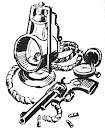 OUR LAST GAME went excellent. I ended up the last session feeling a little let down about the scenes that took place aboard the ship, and I had wanted to fix that. Ships present lots of problems, for one, you’ve got tons of NPCs running around, and 2. I’ve never been on a big old fashion ship. I’ve read lots of stories! I have a deep love for Maritime Adventure, and I didn’t want just short fights to dominate the adventure. THAT IS BORING!!! It got to be too much, and I didn’t feel that I was capturing ship life as well as what I wanted to.
You know that the game is suffering when the only thing that you roleplay is fight scenes, it gives the PC’s to much information, for one; but it also quickly turns into a dice session which isn’t good either.
My biggest challange was figuring out what to put on the ship. We needed something that could blend in, it would be stupid to have a monster lair on a ship with so many men on board, and I remember stewing about this for several days, when it dawned on me, ISOLATION!!! These folks are totally isolated from everything, what if The Thing From Outerspace was on board? Well, I down-graded it to some dopplegangers, but of the Ravenloft variety which are much tougher to detect as they possess powers of ESP.
I had three of them, one boss and two underlings, but as it turned out the PC’s couldn’t tell how many were on board, they were hoping that it was just one, but after finding and killing one, they discovered that their problem wasn’t yet over. These monsters were ambushing men and tying them to barrels, which served as markers for a Si Fan ship that was tailing them. This also let the PC’s know that the Si Fan was not just a human enemy, but was a much darker entity.
We didn’t get as far as I wanted too, but that is cool because I let the PC’s pick the pace that they wanted to go, which worked really well. If they wanted to spend more time investigating certain aspects of the game then I just let them have at it. The whole time they are trying to figure out what was on board, who the monsters were parading as, as well as dealing with every day hazards of an ocean voyage. We just took it one day at a time, and eventually got to Horta and they got the Info that I promised them.
Again, I prerolled weather conditions and build my story around it, the monsters used the weather to their advantage, as did the PCs. A no wind day turned into their favor when, off in the distance, they were able to capture a marker which the monsters had set.
I also prerolled all fight sequences between the monsters and their victims, they were attacking stronger men now, and one of them was injured in the ambush, this lead to it’s undoing, as it should had. The characters caught on and were able to kill that one.
I still wanted to keep some things random, so I generated a cool little list. Twice a day, and once at night I’d roll a d20, if it resulted in a 1 or a 2 then the dopplegangers sabotaged the ship.Random Sabotage Generator (1d12)
1. Poison Food
2. Broken rigging
3. Fire in kitchen
4. Robbed Lockbox
5. Key to arms room stolen
6. Cannon strap breaks, cannon lose on deck
7. Powder keg explodes
8. Diseased rat
9. Fight, mutiny
10. Man over board
11. Lifeboat hull broken
12. Engine breaks down
This actually worked out really well! Of course, this could also work as a random bad thing generator that can be specialized for any voyage, even ones that don’t involve water and can work as a secondary random monster. Nothing is worse then a voyage of any kind that begins and ends in the same sentence. The TRIP itself should mean something.
It took a bunch of time, but the players seemed happy about it,
I did have a disagreement with the DMG.
Under ocean travel they have this percentile number for “seaworthiness”, and ALL of the seaworthy ratings are terrible. The deal is that if weather gets too bad (and it will) you have to check the seaworthiness of the boat, in my case, it gave me the rating of 75%; a roll above the ships rating results in the craft sinking. THIS IS TERRIBLE! If this were the case, there would be no shipping whatsoever, it would be pointless! So I changed things a bit. A result over 75% signifies a catastrophe of some kind, a challenge which if the pc’s fail, then the ship will sink, but it gives them the ability to save it.
This can be a moral dilemma, or a physical challenge of some kind. In this leg of the journey I placed a Henchman in peril, he was serving lookout duty and the mast collapsed, throwing him and the mast into the sea. The PC’s only had three minutes before the mast capsized the ship, and it would had taken 4 rounds for the henchman to climb to safety, and we were using real time so the PC’s had to think fast, in the end, one of them just cut the rigging, sacrificing the henchman, but saving the ship.
Other ideas I think will just depend on how badly I roll over the seaworthiness rating. Anything from simply replacing a destroyed sail during dangerous conditions, to aiding the carpenters in repairing a breached hull. There are lots of possibilities, but I’m not sure that a random list of results for failing a seaworthy check should take place, instead it should be DM’s judgment, and uses the result that he gets to determine just how bad the damage is and if it can be repaired or not.
 SEASONS HELP KEEP A GAME challenging and real. Our ultimate goal as a DM is to give the players money, and take back more then what they have earned. We can use seasons to our advantage in arriving to this point, as all seasons have the potential to make the life of an adventurer miserable. We want them wanting to spend money on Inns, buying new clothing, repairing equipment, and taking better care of the things that they do have, in particular their armor. Most PC’s think that armor is nothing but clothing, to be warn for all hours of the day, in fact, these crazy bastards are no doubt sleeping in the stuff, AND YOU LET THEM!!
Not in my world! Weapons, if not taken care of, will also deteriorate, but lets stick with the wondrous world of weather! For this article we’ll be focusing exclusively on temperate climates, with a little bit of effort on your part, you can easily determine weather effects in more hostile environments.
SUMMER
Summer seems to always be the norm in campaigns that I have played. ALWAYS SUMMER!!! Why? Well, because it doesn’t rain all that much, and the weather has a habit to stay the same for long periods of time. There is a few obvious problems which most DM’s fail to recognize, IT IS UNGODLY HOT!!!
Throughout this article I’ll be focusing on a strange thing called Personal Temperature. This is the temperature that a character has to maintain else he will die. If a characters personal temp gets too high, then he’ll suffer exhaustion, heat stroke, or even death!
Lets talk about armor. All armor classed better then studded leather requires a padding, this padding gets hot and raises a PC’s personal temperature. If a character refuses to remove their armor, or wears improper clothing, then he won’t be able to heal damage normally, he will also suffer a -1 to both hit and damage, as well as lose all benefits from high STR scores. A overly hot character will have the same movement rating as someone who is 1 step more encumbered then he really is. These crunchy bits get worse the longer that a character does this. For reasons of ease, we’ll add penalties weekly. Of course to avoid all of this, then all he has to do is take off his armor and rest for a bit.
With an outdoor temperature above 100°F even leather armor can wear a character down, as can carrying to much stuff. In heat like that you will move slower. Proper clothing is something light, of course if one is spending the day in an open area walking, Sun Burn could also be a problem, how much damage that this causes is up to you, but it shouldn’t be more then 1 or 2 hit points lost . . . It is just sunburn, the goal is to annoy the PC and make them think about their environment then to actually kill them.
When rain does come, it can be a very intense thing. A summer storm can blow up into a lightning storm, and even a tornado. Coastal areas are susceptible to hurricanes. These CAN be lethal to everyone outside (or even inside) when severe weather picks up.
Food is a problem, animals are plentiful, but they aren’t as fat and nutritious as they are during the winter. Fruits are plentiful, but as far as meat goes, it will take twice the amount of hunting to acquire the food that can normally be obtained during the rest of the year. Water is a bit more scarce, it will still be available in most places where you would find it, however it is a dry season so most marshes and river overspill areas will be dried up by mid-summer.
The dry season also leads to another problem that can kill thousands, FIRE! A simple campfire, if not tended to by someone who is skilled with such things (None Weapon Proficiency: Fire-building) can easily rage out of control.
AUTUMN
Fall is a pleasant time to adventure. The temperatures are more humane, Armor, while still requiring oiling and maintenance can be worn during the day, however at no time can you expect to be able to sleep in the stuff and still heal naturally or be able to acquire new spells.
It can get cold during the evening hours, so, as always, one needs to wear the proper clothing to keep their personal temperature up. Loincloth sporting barbarians or chicks running around in chain mail bikinis will get hypothermia if they don’t cover themselves up during the night, or put something on during late autumn.
Animals are fatter and plentiful, water can still be a problem as described in summertime, as can the risk for forest fire. Rain, Snow, and fog are the only weather phenomenon that you really have to deal with.
WINTER
You’ve got to be tough to make it through this season. To do this you need warm clothing, and be diligent about keeping your stuff dry as possible.
There is a benefit to wintertime that can effect everyone. Cold-weather gear is extremely thick, this thickness will grant everybody who wears it at least the AC of 8, however if you want to be a ball breaker, you can demand that winter gear is too bulky, thus all bonuses for high DEX scores are nil and casting spells is impossible, but that is kind of mean.
If the temp is too cold, armor can freeze to exposed skin. Cold weather gear cannot go over bulky armor and still keep the body warm. Anything below freezing requires mild winter gear, but anything below 0°F requires some serious winter clothing. Folks who refuse will suffer no bonuses for DEX, or STR. One will also suffer -1 to hit and -2 to damage from the cold. Exposure will cost 1 hp lost per turn that you aren’t covered. Making saving throws will also be more difficult.
Staying outdoors during harsh winter weather is hard. Even if you have good protection, a character will still suffer a -1 penalty to all rolls unless some strenuous activity is accomplished before trying to perform a given task. During a fight, it will only take a few rounds before blood is circulating again and one attacks normally.
Blizzards, Hail, Fog, and in rare cases Lightning can also cause massive problems to adventurers trapped in the wilderness.
SPRING
Spring is hell. The ground thaws into thick mud that pulls off boots and gets on everything. Rain and wind punish you almost daily. The weather would be warm if you could just keep dry, which is hard. Water is the biggest enemy during this season. Northern snowmelt causes the rivers to swell and blow their banks. The floodplains and marshes fill up, flash floods can happen at any time.
Hot days and freezing wet nights spoil almost any good mood. Like Autumn, one can get away with wearing your armor during daytime marches, however if the padding gets wet, this can lead to sever discomfort and irritation.
Animals also tend to be more aggressive during this season as they protect their young or their matting territory.
End Notes
The trick is to mix things up. An adventure that takes us out into the wilderness should not just be a couple of random encounters, every trip should be an adventure in and of itself. Long distant jaunts into the unknown and often unexplored fringes of the world really do deserve more then being broken down into a couple of sentences about how hard the road was. MAKE IT HARD! It is a challenge, but if accomplished, then it will be appreciated by your players.
 Hope you all had a great Labor Day weekend! With all of the prep that I'm working on, I haven't had much time to even think of this blog. Here is a post that I wrote back in April. Time and time management are big parts of my game, stuff like this never goes out of style! I hope that you enjoy it and find it helpful to your games.
Today I want to talk about an area that is usually over-looked, and it really shouldn’t be, as a part of your job as Dungeon Master, is time-keeper. I have played thousands of games, but an unfortunate thing is that they all appeared to be played during Summer, and it didn’t matter if it took years to accomplish our goal, it was always summer! I don’t think that you need me to tell you how rich and full a campaign can be made by observing the seasons, and YES! Players notice it.
But it is so much work! You say, well there are tricks to properly doing this . . . And you get a chance to play an OLD SCHOOL God! Back in the days when DM’s could be mean and have total control over their games and still get players. This has changed (which I think is a good thing) but there is something fun about playing God.
The first thing that we have to do is figure out how our world observes time. For this essay I am going to base it off of the Norse (AKA: The Viking) world. This system wasn’t perfect, as they based it off of the moon instead of the sun, but I feel that it is more fantastic and colorful without going all nuts creating something that nobody but myself can use.
Measuring Time on Fantasy Worlds
Time isn’t a new concept, it is a necessary evil. It isn’t known when people began to understand that the sun was a very predictable thing that could be relied on to show a passage of time. Typically it isn’t very hard, you only have so many hours of daylight in a day. How many hours you get depends on the season, but I think that that is just too advanced. We don’t need to keep a minute by minute journal of our adventures, however this does get important when going on journeys, it determines how long a person can travel with good daylight, and when they should rest.
Time was kept though the use of sun-dials. Most cities and towns had permanent sun-dials in strategic places where time was important. Churches would want this, as would government officials. As for everybody else, they could just look up at the sky and base a judgment call on what time they thought that it was, they got damned good at it too! Of course, judging time is impossible during the night. For this they had other methods of counting hours, water clocks that dripped a specific amount of water per hour, as well as hour glasses for military use.
Counting time was a business. Typically a professional would observe the time and ring a bell hourly, his apprentice would take his place at night. It would also be this professional that researches different methods of counting time. Not a player character class, but a very important NPC would have this job.
Though unimportant, hours, which is never a fixed thing in D&D, game time and real time are rarely on the same card, hours does lead to days, which is important. This leads us to building a calendar.
Constructing a Fantasy Calender
This chore is so much easier now! What, with computers that can easily be used to construct them. The old way was to buy a modern calendar and just use it, however this wasn’t very fun, as most fantasy realms count months by moon phases, not the 12 months it takes to revolve around the sun.
It is a curious thing that societies that counted days always kept them in groups of 7. Our modern week is still based on the Roman method, each day was ruled by a different God. Just so that we don’t get confused, we’ll keep these days named how they are. We don’t want to get into religion yet.
The Norse calendar differs from the Christian calendar in one dramatic way, as I said before, it’s based on the moon, there for there are usually 13 months in a year. The Norse didn’t keep track of years, this is a Christian concept, but of course we will just so that we can keep track of our timelines.
The first month, for reference purposes, begins on the Full moon in the Christian month of December, and is called Wolf.The Wolf Moon
This moon is a hard one to survive, it is winter but now the days will slowly get longer and longer. Hunting is definitely required.
The Snow Moon
Winter seems to be the cruelest during this month. If you didn’t prepare enough firewood to last the winter, this is also probably the month that you will freeze to death. It is also the last month where you can prepare for the next moon.
Horning Moon
The cruelest moon of all. It is time to completely live off of your stocks, and conserve your energy. It is this time when you stay indoors, tools can be remade, fixed, and sharpened. This is the month of the family, where you keep you’re loved ones close to you. Travel is out of the question, it is too dangerous. Even the animals are scarce because of the terrible winds and snows. Music is really important, as is teaching children about the gods and goddesses that rule this cruel world. A time of rest to prepare for another busy year.
The Plowing Moon
It’s still winter, however the harshness is letting up during this month. The waterways melt and the ground starts to soften. It’s still hard as rock, but it is this time that you must force yourself to plow. If the people bury their dead, it is now time to do it. (The dead were kept during the winter months wrapped up and kept in a building that wasn’t heated so that they wouldn’t rot.)
The Seeding Moon
Spring is now starting. Farmers must go out and plant their first crops. This is also the time to get youngsters involved in romance with other families. Friendships are renewed and new ones are formed. A happy time, you have survived another harsh winter!
The Hare Moon
Babies are typically up and running around during this moon. Re-birth and the Goddess’s rule has returned. The world is coming alive, as are the people.
The Merry Moon
The month of Marriages, and a time of joy. It is now summer, but not so hot that it is unbearable. Mead is generally made during this month and it is plentiful and cheap. Food is also plentiful, and this is a great time to be alive!
The Fallow Moon
The time where farmers re-plow their fields and let the earth rest for a time. Land is redefined, and new fences built. Towards the end of the month, new crops are planted (always they are rotated so not to kill the soil)
The Corn Moon
Fast growing crops with big yields (typically corn) is tended. Buildings must be finished by the end of this month, as next month there will be no time for such things.
The Harvest Moon
Autumn is beginning, the crops are harvested and processed. A very busy time, winter stores are replenished, but there is lots of food for everybody.
The Shedding Moon
The rule of the God is returning, the Trees and plants dry and die.
Hunting Moon
The animals are fat and plentiful. It is time to prepare meat for winter use. Winter has begun again.
The Fog Moon
This name comes from sailors, the seas were the most dangerous at this time because of thick fogs that would roll in and make navigation impossible, but they had to go fish regardless. It is also called the Fog Moon as some years it isn‘t there at all! But for simplicity reasons, we‘ll go ahead and always keep it.
That is the Nordic year. As you can see, most of the names mean something to the people whose toils keep everyone alive. Granted, the Norse did not have what we would call Cities, it was all loose farming communities, but these moon phases would still keep their names in a more advanced society.
The key to naming months, is that they do mean something. Your games typically do take place in temperate climates, the proof of this is that houses are built to weather the seasons, more tropical climates have no need for such sturdy constructions, they are built to weather winter, so it is important that we add winter to the game.
But of course a calendar doesn’t just give meaning to seasons, but it also has another primary function of the game that is typically left out in the wind. RELIGION!!!
Religion and it’s place in the Fantasy Calendar
The Cleric is completely robbed if you don’t use a calendar, we don’t want these guys to be regulated to walking hospitals. In order to really color them how they deserve, is to give them days were religion is important.
Clerics really do deserve much more attention, but that I leave up to you. For this essay, I’ll just focus on the really big Holy days that are always present regardless of what religion we are talking about. Again, I’m going to color it in shades of the Nordic flare.
Samhain
The Autumn Feast of the Dead which takes place on the first moon of Scorpio, or The Shedding Moon. Great Feasts were laid out to celebrate those who have died. Our loved ones and great heroes that made life possible. It is also a time when the veil between this world and the next is at it’s thinnest. We now call it Halloween.
Winter Solstice
The Celebration of Yule, which takes place around December 21st, during the Wolf Moon. This is the shortest day of the year and symbolizes the Death and Rebirth of the Sun God. A Yule Log was burned on this night, and the ashes sprinkled over the fields, with some being kept and stored away to start next years Yule log. Mistletoe is also hung above the door to keep out evil spirits (same thing was done in Summer Solstice) Yule was celebrated with the family, and the family only. Doors are not answered on this day, and all buildings are closed to practice this, the most powerful day of the Calendar. Even Adventures would take a break on this day, Inns would close the doors and observe with the guests who were unfortunate enough to be stranded away from their own families. Candles were burned and life was enjoyed. Today we call this Christmas.
Imbolc
This holiday is observed on the first moon of Horning, or the first day of Spring. It was a time of cleansing and purification. It celebrates the goddess in preparation for growth and renewal. Clerics would be busy blessing homes, and people busy cleaning their homes and airing them out after the long winter. Today it is loosely observed as Spring Cleaning day.
Spring Equinox
This holy day is practiced around March 21st, during the moon of Plowing. It’s the time for sowing, the light and darkness are in perfect balance on this day, so great bonfires are lit and burned. The people dance and be merry, leading cattle between two bonfires to promote fertility.
Beltane
This holiday takes place on the moon of the Hare, and is dedicated to the worship of the Bright God, the Sun God! Food was left out for nature spirits, trying to gain their favors. The powers of the Elves and Fairies were now growing and will reach their peek on Summer Solstice. The house guardians are also honored at this time. The day after Beltane, cattle is finally taken out to field to graze. To add more spice to this holiday, you can have magic be more powerful as well, spells cast by priests act as if cast from a higher level.
Summer Solstice
This holy day is practiced around June 22 during the Merry Moon, and symbolizes the Sun’s Turning. The longest day of the year! The God of Fire and the Goddess of Water are perfectly balanced. Again, great bonfires are lit and mistletoe is hung over doors to ward off trolls and other evil spirits. Herbs collected on this day are extremely potent, as are potions that are brewed.
Lunasa
Takes place on the full moon of Fallow. This is a community festival that celebrates either the Pre-harvest, or in upper Northern regions, the final harvest before winter returns. It celebrates life and age, as many elders won’t make it to see the end of winter. It is also the last day that herbs can be collected, after this day they will be void of any magical properties. It is believed that if you make a wish on this day, it may come true!
Autumn Equinox
Takes place around September 21st , during the Harvest Moon. Again, the sun and the moon were in perfect balance, and this was a time to feast and celebrate a successful harvest season. Food was stored for the winter and thanks was given to the Gods and Goddesses for the bounty.
Creating your own holidays
For each God and Goddess that your characters worship, they will have a day set aside for them specifically. Those that worship this deity will probably not adventure that day, and instead pay respects to them.
There are also local holidays that have nothing to do with religion, perhaps a fair, or a game day where sports are practiced and a winner crowned with honor. Festivals happen annually to encourage growth and to give people a sense of accomplishment. Foods will be cooked and judged, animals will be examined and prizes will be awarded to the owners of exceptional beasts. Hunting tournaments will take place, as will fishing, wrestling, and other games that make people happy.
Holidays are needed to keep life interesting, all work and no play leads to a terrible life. People work hard and they should also be allowed to play hard as well.
You can also lay out special days where things work differently, to keep magic interesting, you can use the moon phases to determine shifts in magic. Perhaps the three days of the Full Moon, good aligned magic users have stronger magic and cast their spells at a higher level then they normally could, and the same for Evil aligned magic users during the 3 days of the New Moon, which forces good magic to be cast at a level lower then the caster.
Building your Timeline
The timeline is used to record world changing events, it is a memory aid for anything that you want to remember. My memory is very shoddy, I keep track of reigns of power, deaths of powerful monsters, rises of powerful enemies. Anything that would help me keep the continuities down. We also want to give news from other parts of the realms to our PC’s, news is always a big deal to characters, through this news they may acquire information that may come in handy, this news may or may not be role-played, if the PC’s are struggling with something you can have them roll against their wisdom to see if their characters remember a little tidbit that could be handy to them now.
Your time-line can go back several thousands of years before play begins. If introducing the ruins of a city, long lost to time, this can be added to your timeline. As a general rule, however, most characters in our world won’t have any knowledge of any history dating back 150 years or more. The exception to the rule is of course your Wizard Class, and those that chose to study Ancient History. If a player does chose the NWP of Ancient History, then that is your cue to build a history for him. This timeline, like everything in D&D, is built slowly over time, as you need it, but if you do do it, it is a way to not only keep things in chronological order, and accurate, but you also want to save your work.
Using a Calendar to save Data
As a player, I can tell you with authority about a little thing called, None Approved Bonus Spells. This is an extra spell that you get because a DM isn’t paying attention, and you know it. By using a calendar, you can eliminate this problem by just keeping a quick tally of spell points used. You can also track XP points daily, and write yourself short notes, such as unknown spells cast on players, charting illness and poisoning times, and other things that require your attention.
Calendars make the life of a DM that much easier, and it is a way that we can save our work! You can more accurately control the game, it gives you specifics at a glance for information that you’ve chosen to record. If a magic item can only be used 3 times a week, there is no excuse for you not to keep this rule in check now. You can get as elaborate, or as simple as you want to get with them, as long as you find a system that works for you, and as a bonus, YOU GET SEASONS!!!! Fighting through raging blizzards! Feeling the relief of a long awaited and much needed rain. Celebrating their gods through ancient rites. Knowing when to construct a Sword which honors the God of Justice, in a way that, if he sees fit, he may bless with his divine power. The world is yours, take it!
 Finally, after a month, we got to sit down and play a game! I'm telling you, I was going through some serious withdraws!
I had a hard time prepping for this thing, I was thinking in such a large scale and totally pyching myself out, that is something that I'm terrible with. With prep, it has to be done in steps. There is no sense in prepping an adventure too far in advance. Doing it can burn you out quickly.
Thus, I chopped up the entire adventure arc into three separate pieces, which will lead up to a grand adventure that I'll be using a module for. Getting there is half the fun, or at least it should be. This session I took the PCs by ocean from London to Lisbon, Portugal. I prerolled random encounters and just prepped what I needed, I ended up ignoring a fight with a giant octopus because it was just too much. I also wrote up a time table of events that would take place during the days. This always seems to work, keeping track of NPC's can be a huge pain, writing down key events that will take place gives you just enough prep to improvise.
Most of my key events revolved around a monster who has yet to be exposed, or fully realized, infiltrating the crew. It attacks random people, these random people were determined during the prep stage, and, since the goal of the monster is to keep things quiet as possible, I still have to make things fair so I quickly roll up the battles to. Only one victim won Initiative, so the shots fired gave the PC's a clue that something spooky was happening. It worked out really well, and I'm not forced to railroad the game by just writing down events that are going to happen.
It is really hard to DM adventures on a ship. On land, PC's generally stay close to each other, and ignore many of the NPC's, but on the confines of a ship you've got NPC's all over the place, and all of them are known. The PC's also aren't going to hang out in the same rooms at the same times. As the adventure ran, two characters took the night shift, and two took the day shift. Plus this was the first leg of the game so folks aren't all on the same page or fully into character yet, so running combat encounters didn't run as smoothly as they could have, but ran smoothly enough. I do have to figure a way out to keep these voyage days more smooth.
Once we got to Lisbon, everything changed. Every DM knows that an adventure is always flawless and perfect until you allow PCs to enter the picture because they'll muck it all up. It's just the law of D&D physics! Normally my PC's are pretty good, they all know that as far as THEM Vs THE WORLD is concerned, they'll get the short end of the stick every time. This time, however, they screwed up from the get-go.
My actual Lisbon City prep was minimal. I drew up a rough city map and only placed the position of the hotel they'll find to rent a room, and the badguy house which was their job to destroy. Other then those two things, it was just a bunch of blobs with the districts so that I could draw buildings as I went. I fully mapped the badguys house and keyed it. I always wanted to run were-rats, so that was the monster. I rolled up my major villains, threw in a member Si-Fan (an organization that they know all about) and the rest I just sat on and thought over. I thought about little things, like "How did the rats get the building?" "What business dealings do they have with rival factions?" "What is the structure and inner workings of the gang?" Millions of questions of stuff that I didn't think that I would need, but as it turns out, I am really lucky that I did!
If this had been a published dungeon, the PC's would had blown it wide open, but because I was able to account for millions of little details I was able to react seamlessly.
Now, as written, I assumed that the PC's would break into the safehouse, scope it out before they blew it up. You know, get a feel for the place, look to see if there is any loot to be had before blasting it to hell. Well, as it turns out, something like this never even entered their minds. Not once! They just wanted to torch the place and get going.
Well, maybe I should back up. I wanted a more Cloak & Dagger feel to the game, so I introduced a MOLE inside of the PC's chief rival, The Six-Fingered Hand. He gave them personal information about everybody who is on the team which has the same goals as the PC's, that of obtaining an artifact. The MOLE requested that, as a sign of good will to him, that they destroy a building. The PC's had no idea what this building was, and they just took it from hearsay from some guy walking past the place, that the place was spooky.
The house itself was a safe-house for an global criminal organization that calls itself PRIME. The Red Death has taken over this guild and filled its ranks up with wererats. These wererats practically run the city. The fact that the MOLE wants this place destroyed begs more questions then what it answers.
Now, the PC that was a demolition expert hasn't been able to make it to the games anymore, thus I created a backup plan. The rats have rigged the place to implode at a moments notice, small reinforced holes will give them time to escape if they need to burn and destroy all of the evidence. The guild steals nothing but junk, looking for information. They make most of their money by producing drugs. Si-Fan was there on this day to secure a large shipment of Opium in exchange for a chemical that they need to manufacture a drug that they can introduce into the water supply that would make all of the humans slaves to the rats (an idea influenced by The Red Death) Because of this security system, the PC's didn't need to use any TNT what so ever! But of course, they didn't enter the place to see this, they just went out and procured 30 pounds of explosives, with a plan to blow the place up from the outside and get the heck out of Dodge.
Well, this plan would had worked . . . kind of, and aright boring as it is, however one of the PC's, for whatever reason, decides to chuck a brick through one of the windows to see what would happen. I guess that he was expecting somebody to come out and yell at him or something, but instead, it just alerted the rats that an enemy was afoot.
The MM says that ratmen can only dominate 1d6 giant rats, well this is boring. I gave them the power to dominate ALL of the rats in the city. They can't see what they see, but they work as spies for the group, millions of little spies running unnoticed through the city, and able to by pass almost any security that one can think of. The PC's weren't expecting this, and had no clue that they were constantly being watched. The PC that threw the rock quickly caught up with the other PC's, thus telling the rats who to watch. Because they insisted on buying TNT, they ended up unknowingly buying it from PRIME, they were just getting deeper and deeper into trouble and they didn't even know it until they realized that almost all of the stuff in their pockets was gone. Checkbooks, money, bullets, keys, any little item on their persons were up for grabs. It was a nightmare!!!
To top it all off, PRIME gave a bad tip to the cops which claimed that the ship that the PC's were using was smuggling opium, so the cops ceased the ship, since it was too late to really search it, they just closed it off and guarded it until the inspectors could enter it the next morning.
Finally they realized that the longer they go without doing SOMETHING, the worse off for them it is going to be. But they don't make any logical decisions, their plan was to set off a keg of gunpowder that they were able to steal off of their own ship, and use to to blow away the back wall of the house, while they entered the front. I had given them a great henchman, a 1st level midshipman who was essentially an empty slate, they could had turned him into something special, but unfortunately, they gave him the job of lighting the powder keg, and needless to say, they got more bang then what they expected. I honestly thought that at least 2 of them would be dead. It messed them up good! But surprisingly didn't kill them . . . well of course the midshipman wasn't so lucky, but Shannon and Josh took the brunt of the explosion and somehow managed to keep 3 hp, and the funniest thing was that the two healthy PC's took off running like a couple of school kids, leaving these guys to try and limp away!!!! Oh, I was laughing my butt off!
Needless to say, the Rats didn't have a hard time rounding them up to demand compensation, the leader of the rats was assassinated right there infront of the PC's, and the other rats just walked away.
Next adventure will take us from Lisbon to the Azures Islands.
 Some folks say that D&D combat is too sterile and orderly, and they aren’t often all that wrong off of the mark. I don’t think that we’ll ever get gritty, realistic combat-- in fact, I doubt that any of us really want that. It takes to long to play combat situations as it is, but if you and your players are getting sick of battles, perhaps it’s time to pepper a combat scenario with some random events.
Now this list is just a suggestion, and it is kept open and brief on purpose because it would just be impossible to create a list for every situation, and again, it would be too complex if it was. Determining a Random Event is done by the DM before INITIATIVE is rolled by checking a d20. If a 1 or a 2 is rolled, then a random event is triggered.RANDOM EVENT GENERATOR d12
1- Change In Area
2- Heroes set off Trap
3- Villains Item Breaks/dropped
4- Hero slips
5- Random Armor Failure
6- Random Grapple
7- Initiative gets Lucky
8- Random weapon failure
9- Villain slips
10- Hero’s Item Breaks/dropped
11- Villains set off Trap
12. Random Encounter
Change in Area: This triggers a drastic change in the environment. A tree suddenly falls, a fire starts, a lightning storm, avalanche, it is case sensitive and it should effect all of the combatants at the same time. This event shouldn’t cause outright damage without giving all involved a chance to make a saving-throw or an ability check of some kind.
Heroes/Villains set off Trap: This can be a real trap in the area, or a natural trap or terrain hazard. For instance a barrel full of beer falls off of a ledge and lands on a characters head, a snake in the grass lashes out, floor gives way, etc.
Hero/Villain’s Item Breaks/dropped: An item that a character is carrying is smashed or dropped, if the randomly selected character is carrying a magical item, it could go off effecting as many people as possible.
Hero/Villain Slips: A character is suddenly on the ground, roll a saving throw to see if item is dropped. The character loses all attacks, and if INITIATIVE is failed, is AC 10.
Random Armor Failure: A random character’s armor malfunctions. A breastplate slips, a visor falls, a shield breaks. Saving Throws may apply, attack that round could be lost, or a chink in the AC presents itself to an enemy.
Random Grapple: Two combatants from opposing sides suddenly find themselves locked in a grapple, weapons were dropped and the two are engaged in unarmed combat.
Initiative gets Lucky: A random character gains +2 bonus to his favor in all rolls made that round.
Random Weapon Failure: A random character’s weapon malfunctions. This can indicate a break (saving throw applies), the weapon is dropped, magical qualities are triggered, the weapon gets stuck in a tree or a wall and character must spend the round trying to yank it out or abandon it.
Random Encounter: A sudden Random Encounter happens, a wild animal suddenly enters the combat neutrally and defends it’s territory. This encounter can be neutral, or work in a sides favor depending on what is rolled.
Suggestions for DM’s
Don’t be a slave to this list. If something is rolled and is either unpractical or doesn’t make sense, then you can either change the situation or ignore the roll entirely. The DM is also always free to just chose an event from the list, while keeping things impartial, perhaps a grapple is indicated and you roll up something weird like a Wizard who is well behind the line? This could mean that an enemy has slipped behind the line and earned himself a chance to attack the wizard. Other times creatures simply can’t slip because it is impossible for them to do such, you’ll need to either ignore the roll or pick something else to happen that may stun the creature for a round.
I really wouldn’t waste to much prep time on this list, it is specifically stuff that you can easily make up on the fly to fit damn near any situation. The key here is to enhance the fun and danger of a combat scenario, not overshadow it, side track the adventure, or punish players. FUN is the key word, as is RANDOM. Keep this in mind and even fist fights with flesh golems can be enhanced.
 Soloman smashed the skull of the zombie lord with a stoke of his mighty war hammer! Suddenly, he felt a change in himself; not only did he feel new strength surging through his veins, and wield his hammer better, but he abruptly knew how to use a crossbow, regardless of never having picked one up before, as well as acquiring the exact methods of how to construct his own arrows. It was amazing! And there was much rejoicing.
Leveling up leads to a few technical dilemmas in a game. It never fails to amaze me that a player can argue about the fact that crocodiles can’t breath fire, and then turn around, five minutes later, and be excited because, suddenly, he can cut his own gems without giving it a second thought. Today we are going to study the Optional Training method of leveling up, why and when we should observe it, and how to go about enforcing it.
Leveling Up
This is probably the most exciting part of the game. Getting better at your trade, and obtaining new skills. We DM’s can put them through more hell, which is good for us, and they get to be stronger, which is good for them, so everybody is happy!
Leveling up is definitely a necessity of the game, but it shouldn’t be an excuse to lose the logic of the game. Some stuff will automatically be apparent, while others will require a Dungeon Master to make a judgment call before they take effect. For this we are going to break down exactly what happens when a character levels up, and how we can translate this into our games logically.
Of course the first thing we have to do is change our thinking about what happens in the first place. In order to level up, one has to first satisfy the XP requirements to do so. This alone doesn’t grant special skills, it just allows the character the ability to grow. He is now ready for the next level! Doing this can lead to sever problems if we don’t apply logic. For instance, a character who satisfies his XP requirements while in the city will have more options then one who does so while battling his way through a dungeon crawl. We always have to ask ourselves if this is something that can be obtained by practice, or if it is something that must be learned through time. We as DM’s and Players must look at our environment and our past to see exactly what our leveling up options are.
Hit Points
Our experience does make us more skilled at seeing stuff coming, and knowing how to avoid it. The hit point works with your armor class. A highly skilled character is more skilled at avoiding grievous bodily harm then a less skilled one.
I suppose that it is possible for sudden bonus hp to take effect immediately, however we had to do something truly heroic before it does. If we slay a boss or a creature stronger then us, then we have completed this requirement, however if you got this new level from fighting lesser individuals, you’ll have to wait.
Hit Points can be gained above ground by boasting to others about your fighting ability. Telling stories ourselves, a fellow character boasting of your ability, or even an NPC bard singing of you as a hero can gain you the extra hp that leveling up has afforded you.
THAC0
Thac0 is, of course, your ability to hit armor class zero. It makes hitting your enemy easier. This one is automatic, it comes from your experience of watching an enemy and knowing how they will move to avoid you.
Saving Throws
This ability is also automatic, it is our ability to avoid and endure situations based on our experience, thus it is a natural ability.
Weapon Proficiencies
Now, this is where it gets a bit tricky. Depending on the character, and how a player is playing it, determines exactly what kind of WP is available to him. A warrior who is fighting with an Axe and wishes to specialize in it should be allowed to do so. So should a character who has used a weapon that he isn’t proficient with. By using it, he has been practicing. A character can also state that they are practicing with a weapon in their downtime-- if, in fact, they are getting downtime. A character who has spent his entire level in a dungeon isn’t getting any downtime to practice. He also must own the weapon that he is wishing to be proficient in.
A character can also learn a new proficiency from someone how is proficient in the weapon to begin with. This can be training with a fellow PC, or paying an NPC to teach you. Warriors wishing to specialize in a weapons group, or a specific fighting style must take time off of adventuring and pay a master to teach him this skill.
Training can also be extended to fulfilling ones ability to improve their THAC0, especially if the party has too much money, the DM can relieve them of it by insisting that they must pay a specific amount before they improve it. It would also make Leveling up more difficult as a Character of 10th level must actually seek out a warrior of 11th level before they can receive the improved THAC0. In this way, we can keep the dice in our favor for longer, which does improve the challenge of the game in the long run.
Non-Weapon Proficiencies
A misunderstood concept. All characters can, say, light a fire, but a PC who is proficient in lighting fires can light one with wet wood and under trying circumstances. Some NWP can be obtained by simply practicing, while others require skills that must be learned. This is up to the DM, and is totally a logical decision. Skills open up to the character could depend upon culture and up bringing. If you don’t know if a skill should be available for free, ask the Player how they would know how to do this in the first place.
Skills that require teaching should cost money, and some time away from adventuring. Some NWP require more then one slot. Armorer for instance, requires 2 slots. The first slot must be paid for with cash as you’ll need to study under an actual professional. The second slot can be then filled through practice. Of course a PC armorer will never have the skills of professional armorers, however they will be able to maintain their own armor and with the right tools, manufacture their own.
Naturally, for trade type NWPs, you’ll need to have access to somebody who can teach you the basics. Other things must be learned through trial and error, if a character attempts to perform an action that they aren’t proficient in, they can write it down on their sheet, even if they fail! Later, when they get another slot they can easily add it to any of these abilities to become proficient in it.
Also, I’d like to point out that the Slots listed in the PHB are just suggestions. Sometimes you as the DM can judge that they have enough time on their hands to acquire a bonus slot, for instance if a party has to spend a few months on a ship, or some other activity that will be able to afford them time to practice a new skill, then they should always be allowed to do this.
Class Skill Abilities
The rule of thumb here is that in order to access benefits of leveling up, one must find the proper teacher. A teacher who is 5th level can train all levels below him, but won’t be able to train a 6th level character.
Warriors: This class is already covered above. If a soldier sees lots of action, improvement could be immediate, or require catering to his ego, or studying under a higher level warrior.
Wizard: This class already forces this rule. New spells must be researched in laboratory conditions, and written in a spell book. Spellbooks must be purchased and constructed, first spell requires acquiring the proper components, after the spell is learned, the components are usually considered to always be on the wizard. Gaining access to higher level spells could either be natural, or require further training by a properly leveled teacher. Cost of training should be expensive and time consuming. A suggestion is 500GP per spell level, plus 1 week per spell level.
Priest: Spells are acquired through meditation, so this handles itself. WP’s however need training as described. THAC0’s are only improved by learning from either a fellow priest or a warrior with the appropriate level.
Rogue: Abilities can either be placed on skills that you have used regularly, or you can buy training from a thief who has more points dedicated to a specific skill then you do. If you want to put 15% points towards your Open Locks score, then you must find a thief who has at least 15% points above your current skill level; if they only have 10% points, then that is the maximum that you can learn from that character.
Improving a thief’s fighting skills requires either a fellow thief or a warrior of the appropriate level.
Active Training
A character who fails to fully max out may or may not had missed the opportunity. Proficiency slots should always stay open, but things like THAC0 should not be. If a warrior misses an opportunity to increase his 3rd level THAC0, and obtains 4th level, that opportunity will be forfeited because a character can only gain 1 THAC0 point per level.
Potentially, this can improve role-playing opportunities, but of course this will depend on your players. Some would get a kick out of this, while others would leave the game and of course we don’t want this to happen. This is an extreme of how you can run this, finding a happy medium is still important, and again! This system won’t work for all campaigns, especially ones where the action is non-stop and the characters never get any breaks to do their trainings. Good luck!

.jpg)